



History often gets packaged as a long parade of serious people making serious decisions while wearing extremely uncomfortable clothing. Kings sign treaties. Generals plan battles. Philosophers say important things while staring dramatically into the distance. That’s the version most of us imagine.
Then you start digging into the actual record and realize something surprising: the past was just as strange, chaotic, and occasionally ridiculous as the present. The only real difference is that everyone involved is wearing wigs.
Take George Washington, for example. Nearly everyone grew up hearing the same simple story: the first U.S. president wore wooden teeth. It’s memorable, easy to picture, and completely wrong. Washington’s dentures were far more unsettling. They were crafted from a mix of hippopotamus ivory, elephant ivory, cow teeth, and even human teeth, all held together by metal springs powerful enough that closing his mouth required constant effort. The famous stern look seen in portraits wasn’t necessarily a deliberate show of leadership. It may have been the expression of a man physically struggling to keep an entire dental engineering project from launching out of his face.
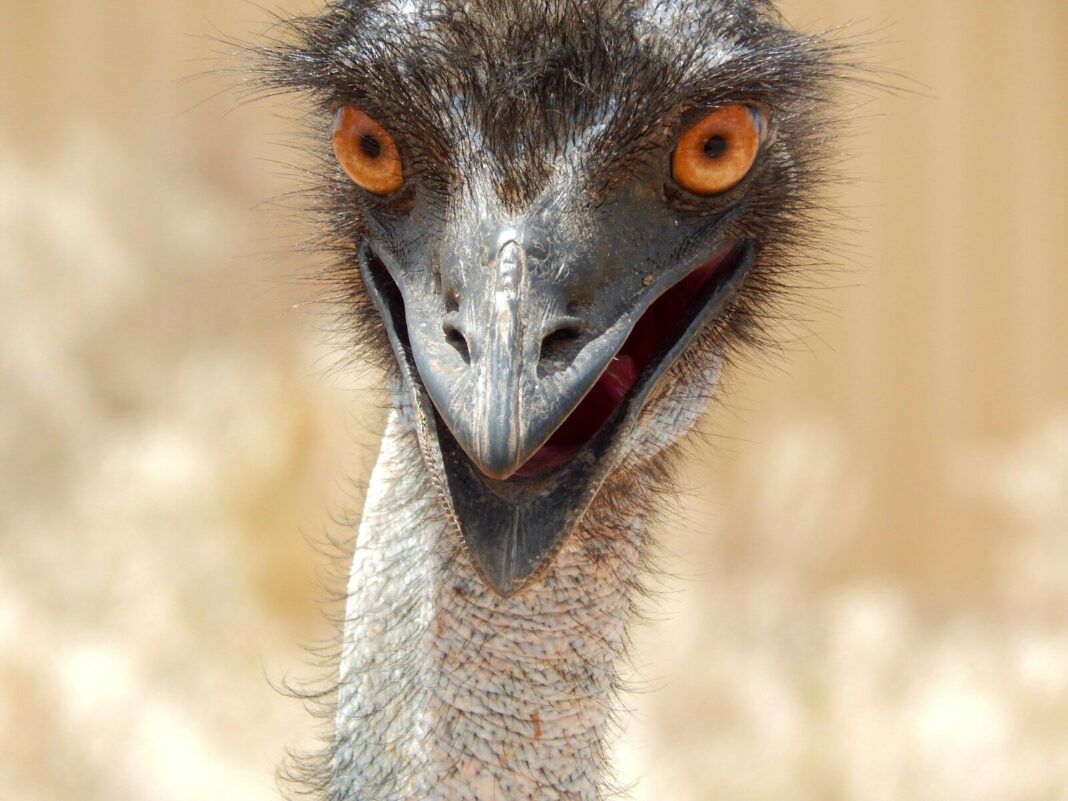
Then there was Australia’s unforgettable military campaign against emus in 1932. After World War I, veterans were given farmland in Western Australia, only to find their crops being devoured by roughly 20,000 large, fast, stubborn birds. The government responded in the most official way possible: by sending soldiers armed with machine guns and thousands of rounds of ammunition. The emus scattered, regrouped, and continued destroying crops with impressive efficiency. Soldiers fired repeatedly, but the birds proved surprisingly difficult targets. Eventually the military withdrew. In the official record, the emus effectively won.
Napoleon Bonaparte, conqueror of much of Europe, once faced a similarly humiliating opponent: rabbits. After signing a peace treaty in 1807, Napoleon organized a celebratory rabbit hunt. Unfortunately, the rabbits gathered for the event weren’t wild rabbits. They were domesticated farm rabbits accustomed to being fed by humans. When Napoleon arrived, hundreds of rabbits ran toward him instead of away from him. The swarm overwhelmed the gathering, chased the emperor across the field, and forced him to retreat to his carriage. Few military campaigns ended so quickly.
Medieval Europe managed to produce an even stranger chain reaction. In the 1230s, Pope Gregory IX issued a decree associating black cats with devil worship. The result was widespread killing of cats across parts of Europe. Cats, of course, are extremely good at controlling rat populations. Remove enough cats and the rats multiply rapidly. Rats carried fleas, and those fleas carried the bacterium responsible for the bubonic plague. While many factors contributed to the Black Death, historians often note that reducing the cat population certainly did not help matters.
Sweden also contributed its own bizarre chapter when King Gustav III attempted to prove coffee was dangerous. He arranged an experiment involving two prisoners whose death sentences were commuted if they participated. One drank several pots of coffee daily, the other tea. Doctors monitored the experiment. The tea drinker died first. Then the doctors died. Eventually the king himself was assassinated. The coffee drinker lived into his eighties.
Ancient Rome, despite its engineering brilliance, had its own questionable ideas. Some Roman dental recipes recommended brushing teeth with mixtures that included crushed mouse brains, rabbit heads, lizard livers, and urine. The ammonia in urine does technically have whitening properties, but the overall formula leaves modern dentistry feeling grateful for progress.
And during World War II, the Polish army officially enlisted a Syrian brown bear named Wojtek. Adopted as a cub by soldiers, he grew up alongside them and eventually learned to carry artillery shells during the Battle of Monte Cassino. To simplify transport logistics, the army formally gave him the rank of private, complete with a serial number and pay. He was later promoted to corporal and spent his retirement in the Edinburgh Zoo, where visiting Polish veterans would greet him like an old comrade.
History, it turns out, is not just a timeline of empires rising and falling. It is also a long record of strange decisions, accidental consequences, and moments so ridiculous they sound invented. And yet every one of them actually happened.