



Most churches don’t mean to exclude families raising children with disabilities. But good intentions aren’t enough—and silence is complicity. Here’s the hard truth about what needs to change, starting this Sunday.
Let’s cut straight to it: the numbers should terrify you.
We’ve spoken to over 100 churches in the Tampa Bay area. When asked about special needs families, 100% of them said the same thing:
“We want to do more for special needs families.”
BUT… 80% “We only have a handful of special needs families in our congregation.”
But here’s the uncomfortable truth the 80% talk a mean game : The math doesn’t add up.
If 1 in 6 families is raising a child with special needs (according to the CDC), why is it that churches only have a “handful” of these families?
The answer is simple: They left.
And they didn’t leave by accident.
THE UNCOMFORTABLE TRUTH
In the journey of faith, Christians are called to care for the vulnerable and marginalized. We preach it. We sing about it. But when it comes to families raising children with special needs, many churches fail spectacularly.
Churches are solving the wrong problems
These families face unique challenges that require not only practical assistance but also spiritual and emotional encouragement. They navigate a complex web of medical appointments, therapy sessions, educational advocacy, and financial strain, all while managing the emotional toll of caregiving.
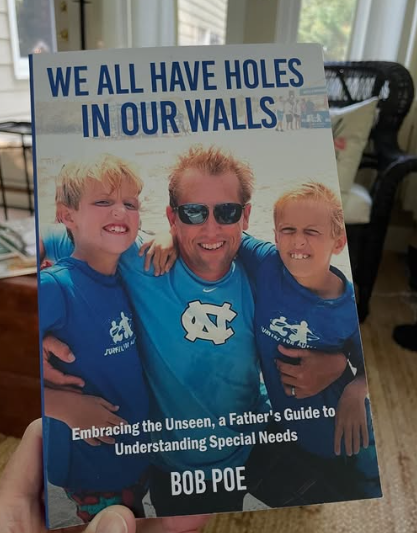
In his book, We All Have Holes in Our Walls: Embracing the Unseen, A Father’s Guide to Understanding Special Needs, Bob Poe shares his personal journey as a father of children with special needs. He emphasizes the unseen struggles families face, including feelings of isolation and the constant need for advocacy. Poe writes:
“The world often sees the visible cracks in our walls but rarely acknowledges the strength it takes to hold those walls together.”
For many families, the church should be a place of refuge and support. Instead, it’s often another place where they feel judged, excluded, and exhausted.
WHY SPECIAL NEEDS PARENTS DREAD SUNDAY MORNING
Let’s be brutally honest about what these families experience:
1. THE STARES
Every noise their child makes is met with turned heads and disapproving looks. Parents spend the entire service in fight-or-flight mode, waiting for the next disruption and the judgment that follows.
2. THE ISOLATION
They’re relegated to the cry room—again. Or they sit in the back, ready to make a quick exit. They never get to sit with friends, participate in worship, or hear a complete sermon.
3. THE WELL-MEANING IGNORANCE
“Have you tried essential oils?” “Maybe if you disciplined him more…” “God will heal her if you have enough faith.” Each comment, however well-intentioned, adds another weight to already exhausted shoulders.
4. THE EXCLUSION
Their child isn’t invited to VBS. Sunday school teachers look panicked when they arrive. Youth group activities aren’t accessible. The message is clear: Your family doesn’t fit here.
5. THE EXHAUSTION
They spend more energy managing other people’s discomfort than they do worshiping. By the time they get home, they’re more drained than refreshed.
Bob Poe and his co-authors—Jacob Boals, Abbey Poe, and Stephanie Franklin—capture this reality perfectly in We All Have Holes in Our Walls:
“No one can do this alone. We need each other—friends, family, and the church—to help us patch the holes and keep the walls standing.”
The question is: Is your church helping patch the holes, or are you adding to them?
WHAT CHURCHES GET WRONG: 5 THINGS THAT MUST STOP
If your church is guilty of any of these, it’s time for a hard conversation:
1. “HAVE YOU TRIED [INSERT MIRACLE CURE]?”
What you’re saying:
- Essential oils
- Gluten-free diet
- More prayer
- Different parenting techniques
What they hear: “You’re not trying hard enough. This is your fault. If you were a better parent/Christian, your child would be normal.”
What to do instead: Ask: “How can I support you?” Then listen. Don’t offer advice unless specifically asked.
2. “GOD WILL HEAL YOUR CHILD IF YOU HAVE ENOUGH FAITH”
What you’re saying: Prosperity gospel nonsense that equates faith with physical healing.
What they hear: “Your child’s disability is a result of your weak faith. You’re spiritually deficient.”
The theology is garbage. The damage is real.
What to do instead: Recognize that God works through weakness (2 Corinthians 12:9). Disability isn’t a curse—it’s part of the human experience. Stop treating it like a faith problem.
3. “MAYBE YOUR CHILD WOULD BE BETTER IN THE NURSERY”
What you’re saying: Your child is disruptive and doesn’t belong in the main service.
What they hear: “Your family isn’t welcome here. You’re ruining church for everyone else.”
What to do instead: Create sensory-friendly services. Train volunteers. Make accommodations. If a child can’t sit still or stay quiet, that’s a church design problem, not a child problem.
4. “ALL KIDS ARE DIFFICULT SOMETIMES”
What you’re saying: You’re trying to relate and normalize their experience.
What they hear: “You’re overreacting. Your challenges aren’t real. Stop complaining.”
What to do instead: Acknowledge the difference: “I can’t imagine how hard that must be. What you’re dealing with is beyond typical parenting challenges.”
5. NO ACCOMMODATIONS, THEN SURPRISE WHEN FAMILIES DISAPPEAR
What you do: Offer no support, no accommodations, no understanding. Then act confused when special needs families stop coming.
What they experience: “They don’t actually want us here. We’re a burden.”
What to do instead: Proactively reach out. Ask what they need. Make changes. Then check in regularly. Don’t wait for them to leave before you notice they’re struggling.
THE BIBLICAL MANDATE: THIS ISN’T OPTIONAL
The Christian faith calls believers to be the hands and feet of Christ, ministering to those in need. James 1:27 reminds us:
“Religion that God our Father accepts as pure and faultless is this: to look after orphans and widows in their distress.”
While this verse specifically mentions orphans and widows, its broader implication is clear: the church is called to care for the most vulnerable among us.
In Matthew 25:40, Jesus teaches:
“Truly I tell you, whatever you did for one of the least of these brothers and sisters of mine, you did for me.”
This isn’t a suggestion. It’s not a “nice to have.” It’s a core mandate of the Christian faith.
When you exclude special needs families, you’re not just failing them—you’re failing Christ.
Bob Poe echoes this sentiment in We All Have Holes in Our Walls, urging readers to embrace the unseen struggles of special needs families with compassion and humility:
“The cracks in our walls are not weaknesses; they are reminders of God’s grace and the strength we find in community.”
WHAT YOUR CHURCH MUST DO: 5 NON-NEGOTIABLE CHANGES
Enough talk. Here’s what action looks like:
1. CREATE SENSORY-FRIENDLY WORSHIP EXPERIENCES
What this means:
- Dim lights by 20%
- Allow movement during worship
- Provide fidget tools at the entrance
- Designate a “safe space” room (not a punishment room)
- Train ushers to welcome, not redirect
Cost: $50 for supplies
Time: 2 hours of planning
Impact: Families can actually worship
2. TRAIN YOUR VOLUNTEERS (ACTUALLY TRAIN THEM)
What this means:
- 1-hour training on common disabilities
- Role-play scenarios (what to do when…)
- “What to say/not say” guide
- Ongoing support and check-ins
Cost: $0
Time: 1 hour quarterly
Impact: Volunteers feel equipped, families feel safe
3. IMPLEMENT A BUDDY SYSTEM FOR SUNDAY SCHOOL
What this means:
- Pair trained volunteers 1-on-1 with kids who need support
- Simple application process for families
- Regular communication with parents
- Celebrate successes, adjust as needed
Cost: $0
Time: Volunteer recruitment and training
Impact: Kids can participate, parents can breathe
4. OFFER RESPITE CARE
What this means:
- Once a month, offer 3 hours of childcare
- Trained staff specifically for special needs kids
- Parents get date night, rest, or just silence
- No judgment, no questions, just support
Cost: $200/month for trained staff
Time: 3 hours monthly
Impact: Marriages saved, burnout prevented
5. ASK THE QUESTION—THEN ACTUALLY LISTEN
What this means:
- Survey special needs families: “What would help?”
- Meet with them individually
- Listen without defensiveness
- Implement one suggestion per quarter
- Report back on progress
Cost: $0
Time: 30 minutes per family
Impact: Families feel heard, church improves
STORIES OF HOPE: WHAT IT LOOKS LIKE WHEN CHURCHES GET IT RIGHT
Across the country, there are inspiring examples of churches that have embraced their calling to support special needs families.
One church in Texas created a sensory-friendly worship service for children with autism. The service features dimmed lights, quiet music, and a relaxed atmosphere, allowing families to worship together without fear of judgment. The pastor shared:
“We want every family to feel welcome here, because that’s what the kingdom of God is all about.”
Other congregations have established buddy programs, pairing volunteers with children who need extra support during Sunday school or worship. Some have launched ministries specifically for families of children with disabilities, offering tailored programming and resources.
These churches aren’t doing anything extraordinary. They’re simply doing what the church is supposed to do.
THE CHALLENGE: WHAT WILL YOU DO THIS SUNDAY?
Let’s be clear: You can’t claim to follow Jesus while ignoring the families He explicitly told you to care for.
1 Corinthians 12:26 says:
“If one part suffers, every part suffers with it; if one part is honored, every part rejoices with it.”
Special needs families are suffering in your church right now. They’re sitting in parking lots, deciding. They’re making excuses for why they can’t come back. They’re losing faith—not in God, but in His people.
What will you do about it?
THIS WEEK:
- Identify one special needs family in your congregation
- Ask them: “What would make Sunday mornings easier for you?”
- Implement one change by next month
THIS MONTH:
- Train your volunteers
- Create a sensory-friendly service
- Start a buddy program
THIS YEAR:
- Make inclusion a core value, not an afterthought
- Budget for respite care
- Become known as the church that welcomes everyone
THE BOTTOM LINE
Bob Poe writes in We All Have Holes in Our Walls:
“The cracks in our walls are not weaknesses; they are reminders of God’s grace and the strength we find in community.”
Your church can be that community. Or you can be another crack in the wall.
The choice is yours.
But know this: Silence is complicity. Inaction is exclusion. And excuses are just another way of saying, “You don’t matter.”
Special needs families matter to God. They should matter to you.
What will you do this Sunday?
RESOURCES
Want to learn more?
📖 We All Have Holes in Our Walls: Embracing the Unseen, A Father’s Guide to Understanding Special Needs
By Bob Poe, Jacob Boals, Abbey Poe, and Stephanie Franklin
Available on Amazon and Barnes & Noble
Sources:
- Bob Poe, We All Have Holes in Our Walls: Embracing the Unseen, A Father’s Guide to Understanding Special Needs
- The Holy Bible, New International Version (NIV)
- Stories of inclusive ministries in churches across the U.S.