


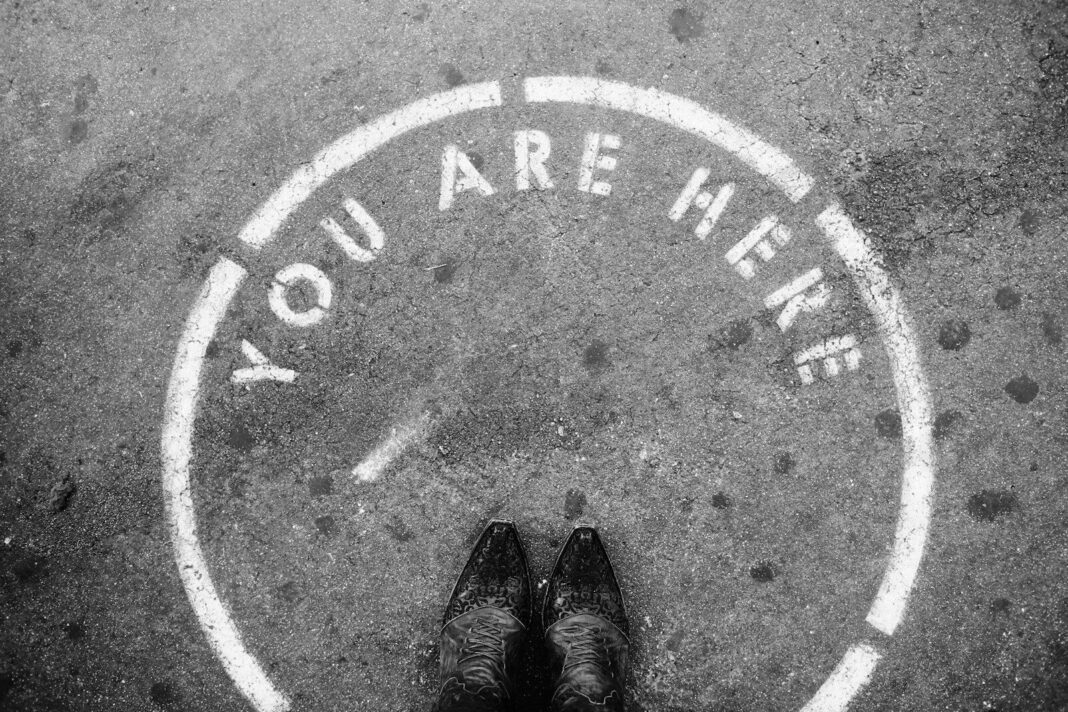

The most courageous thing you can do is stop measuring today against a yesterday that no longer exists.
Somewhere along the way, we got this idea stuck in our heads about what “starting over” means. We think it means going back. Back to the way the friendship felt during its best season. Back to the energy and body we had ten years ago. Back to the business momentum before everything fell apart. Back to the early days of the relationship when everything was electric, effortless, and new.
We think restoration means recreation.
That one misunderstanding has quietly stolen more joy, more progress, and more genuine connection than almost anything else. Because here’s the truth: you cannot start from where you were. You never could. You can only—ever—start from where you are.
Here’s what happens when we refuse to let go of where we were. We take a snapshot of something at its best moment—a friendship at its easiest, a body at its strongest, a business at its most exciting, a relationship at its most romantic—and we frame it. We hang it on the wall of our expectations. And then we spend every day comparing the living, breathing, changing reality in front of us to a photograph that stopped moving years ago.
The friendship feels disappointing—not because it’s bad, but because it’s different than the snapshot. The business feels like failure—not because it isn’t growing, but because it doesn’t look like it did in the beginning. The relationship feels like it’s lost something—not because love has left, but because that particular season of love has evolved into something quieter and deeper that we haven’t learned to appreciate yet. The body feels like it’s letting us down—not because it isn’t strong, but because we keep asking it to be 27 again.
We are grieving something that was never meant to be permanent.
And the grief is real. Let’s not skip past that. It’s okay to miss what was. It’s okay to honor the season that shaped you. It’s okay to feel the ache of something that has changed beyond your ability to change it back.
But grief was never meant to be a permanent address.
At some point—and only you know when that point is—the most faithful thing you can do is look at what’s actually in front of you and ask a different question. Not “How do I get back to what this was?” But “What can this become—starting from right here?”
This one is personal. There’s a friendship in my life that I’ve been quietly measuring against a version of itself that no longer exists. A season when things were easy, natural, unspoken. When the dynamic just worked without anyone having to think about it.
And somewhere along the way—life has a way of doing this without asking permission—things shifted. People changed. Circumstances changed. The easy rhythm got complicated.
I found myself doing what most of us do. Waiting for it to go back to what it was. Measuring every interaction against the snapshot on the wall. Feeling the gap between what is and what was—and quietly resenting the gap instead of honestly examining it.
Here’s what I’ve been learning though. I cannot force anyone else to change their perspective. I can only change mine.
And changing mine doesn’t mean lowering my standards or pretending the shift didn’t happen. It means being willing to meet this friendship—this person—where they actually are right now. Not where they were. Not where I wish they were. Not where the snapshot says they should be. Where they are.
And showing up with the same willingness I’m asking for—even when I can’t guarantee it will be reciprocated.
That is not weakness. That is one of the hardest, most mature, most quietly courageous things a human being can do.
If you have a friendship, a relationship, or a partnership sitting in that same complicated space right now—you already know exactly what I mean.
For some of you, the frozen snapshot isn’t a relationship. It’s a body. The energy you had before the diagnosis. The strength you had before the injury. The weight you carried before the years of stress eating and survival mode and just trying to get through. The stamina of your younger self that you keep holding up as the standard for your current self.
And every morning you wake up and measure what you have against what you had—and the gap feels like failure.
The body you have today got you here. Through everything. Through the hard seasons and the health scares and the nights you weren’t sure you’d make it through. Through the grief and the stress and the years that took more than they gave.
This body—right now, exactly as it is—is not a disappointment. It’s a survivor.
Starting from where you are doesn’t mean giving up on getting healthier, stronger, or more energized. It means honoring the starting line that’s actually in front of you instead of standing at an imaginary one twenty years behind you.
Progress from here is still progress.
Entrepreneurs and business owners—this one’s for you. There’s a version of your business that lives in your memory as the gold standard. Maybe it was the early days when everything felt possible and the energy was electric. Maybe it was a specific season of growth that you’ve been trying to recreate ever since. Maybe it was before the market shifted, before the competition changed, before the thing happened that changed everything.
And you’ve been trying to get back there.
Building strategies designed for a market that no longer exists. Chasing a model that worked in a different season. Measuring current results against a snapshot from a completely different economic reality.
The most successful pivots in business history didn’t happen because someone figured out how to go backward. They happened because someone was honest enough to say—“This is where we actually are. What do we build from here?”
The market you’re in today is the only market you can actually work with.
Start there. Build there. Grow from there.
Early love is electric. It’s also exhausting, anxious, and largely built on projection.
What we often miss—and grieve—when the early electricity settles into something quieter is that the quiet is not the absence of love. It’s the deepening of it.
The relationship that has survived conflict and misunderstanding and the unglamorous daily work of choosing each other—that relationship has something the early electric version never had.
It has proof.
Proof that it’s real. Proof that it holds. Proof that it isn’t built on feeling alone but on decision, commitment, and the kind of love that shows up even when it doesn’t feel like showing up.
If you’re measuring your relationship against its earliest season and finding it lacking—you might be looking at a masterpiece and calling it unfinished because it doesn’t look like the sketch anymore.
Start from where you are.
There is something beautiful being built right in front of you.
And for those of you in a spiritual dry season—maybe you remember a time when faith felt electric. When prayer felt immediate. When you felt close to God in a way that seemed effortless and constant and alive.
Right now it feels distant. Quiet. Like something has shifted and you can’t quite find your way back to what it was.
God is not waiting for you to get back to where you were. He is meeting you exactly where you are.
The dry season is not punishment. The quiet is not absence. The distance you feel is not the reality of where you stand.
You don’t have to perform the faith you used to have to access the God you’ve always had.
Show up as you are. From where you are. With what you have.
That has always been enough.
You have permission to stop going back. You have permission to release the snapshot from the wall—to honor what it was without demanding that today become it again.
You have permission to look at the friendship, the health, the business, the relationship, the faith that’s right in front of you—exactly as it is today—and decide that this is a worthy starting point.
Not a consolation prize. Not a lesser version of something better. A starting point.
Because here’s the truth: every single thing you have ever loved, built, achieved, or become started from exactly where you were at the time.
Not where you wished you were. Not where you used to be. Where you were.
And it became something worth having.
This moment—right now, exactly as complicated and imperfect and different-than-you-planned as it is—is someone’s future “remember when we started from there.”
Start from where you are.