

We All Have Holes in Our Walls Most fathers never say these thoughts out loud. One finally did — and it may help save someone else from carrying the weight alone.
There is a chapter in this book that Bob Poe almost did not write.
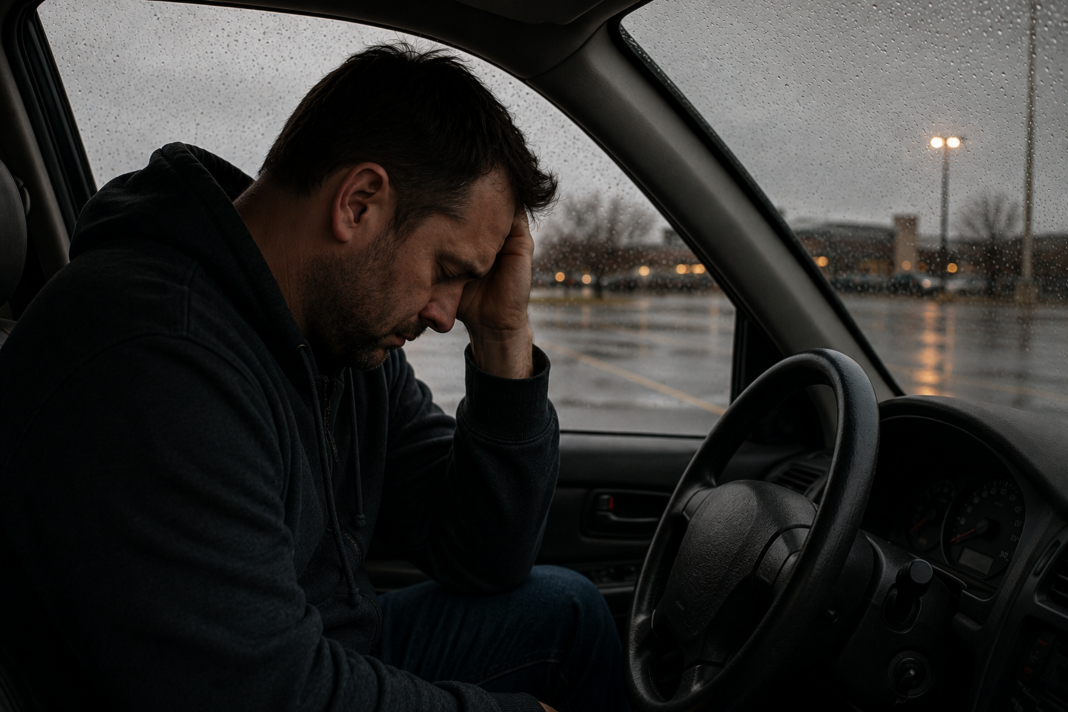
He calls it “The Dark Places.” It sits at the end of a comprehensive, practical, deeply researched guide for fathers of children with special needs — and it contains a confession that most men would carry to their graves. A rainy Friday. An empty parking lot. A laptop returned after a layoff. Two hours of sitting alone, wondering if his family would be better off without him.
He wrote it anyway.
That decision — to tell the truth about the darkest corner of this journey — is what separates We All Have Holes in Our Walls from every other special needs parenting book on the shelf. And there are many books on that shelf. Most of them are written for mothers. Most of them are practical, encouraging, and carefully sanitized. Most of them would never put that parking lot scene into print.
Bob Poe put it in print. And in doing so, he almost certainly saved someone’s life.
📖 What This Book Actually Is
On the surface, We All Have Holes in Our Walls is a comprehensive guide for fathers navigating the world of special needs parenting. And it delivers on that promise with remarkable thoroughness.
Bob and his wife Chrissy have twin sons — Evan and Ethan — born at 28 weeks, weighing two and three pounds respectively, diagnosed at age three with Autism, ADHD, ODD, Tourette’s, and OCD. Twenty years of lived experience, hard-won advocacy, financial devastation and recovery, educational battles, medical victories and disasters, and spiritual reckoning are compressed into twelve chapters that cover everything a father needs to know and almost nothing he will find anywhere else in one place.
The chapter on finances is brutally honest — second mortgages, emptied retirement accounts, the SSI maze that Bob describes simply as: “GET. A. LAWYER.” The chapter on education documents the specific, infuriating reality of a principal who “didn’t believe in autism” and a teacher caught on video mocking Evan — damage that took years to undo. The chapter on advocacy traces the family’s journey from church soccer league humiliation to finding their identity through Surfers for Autism — a surf therapy organization that Bob credits with transforming his family’s entire outlook on life.
Each chapter ends with reflection questions that are genuinely useful, not performative. The appendices alone — state-by-state resource guides, ABLE account information, housing assistance programs — represent months of research that any family could use immediately.
But the book is more than a resource guide. It is a testimony.
👨👧👦 The Voices That Make It Real
One of the most powerful structural choices Bob makes is inviting other voices into the book.
Abbey Poe — his daughter, six years older than her brothers — writes a sibling’s account that is quietly devastating and ultimately triumphant. She describes standing between two incubators in the NICU at age five, both tiny babies gripping her finger. She describes being bullied at school for having brothers with autism. She describes the resentment, the guilt about the resentment, and the years it took to forgive herself for feelings that were entirely human and entirely normal.
“Educating helps people understand and creates a bubble around you and your sibling — only those who accept my brothers can be in that bubble.”
That line alone is worth the price of the book for any sibling trying to find language for what they carry.
Stephanie Franklin, the neighbor across the street, offers something equally powerful — the perspective of a family who chose inclusion not as a program or a policy, but simply as a way of living. Her account of how her sons Conner and Parker formed genuine, lasting friendships with Evan and Ethan — including a secret handshake that still exists ten years later — is a reminder that the right community does not just tolerate difference. It does not even notice it.
Jake Boals, Bob’s business partner, speaks to what inclusion looks like in the professional world — and what it costs and gives back to those willing to step into it.
These voices do not feel like additions to Bob’s story. They feel like proof that the story is real.
✝️ The Faith Thread
Running through every chapter is a faith perspective that never becomes preachy and never pretends to have easy answers.
Bob quotes John 9:1-3 — the disciples asking Jesus who sinned to cause a man’s blindness, and Jesus answering: “Neither this man nor his parents sinned, but this happened so that the works of God might be displayed in him.”
He does not weaponize that verse. He does not use it to bypass grief or shortcut suffering. He uses it the way it was meant to be used — as a reframe that restores dignity without dismissing pain.
The chapter on faith includes perspectives from multiple traditions — Christian, Jewish, Muslim, secular — with a generosity that reflects a man who has been humbled enough by his own journey to stop assuming he has the only map.
And then there is the moment a neighbor asked his wife Chrissy: “Do you think God is punishing you because you did it in vitro?”
Bob’s response is not rage. It is something harder and more mature — the recognition that even the most well-meaning people will say the wrong thing, and that the work of advocacy includes educating even those who wound you.
💡 The Chapter That Changes Everything
Chapter 12 — The Dark Places — deserves its own conversation.
Bob describes the parking lot. He describes the bottle of pills in the glove compartment. He describes what brought him back: a text from Chrissy. Six words. “Evan just used a full sentence to ask for juice.”
He describes the thoughts he has never spoken aloud — the fantasies of running away, the toxic envy toward friends with typical children, the anger at God, the moments of wondering whether the insurance policy was worth more than his presence.
And then he writes the most important sentence in the book:
“If you’ve had these thoughts too, you are not alone. And you are not a bad father for having them.”
This is not a chapter with strategies or resources. It is a chapter with truth. And the truth is that this journey breaks people — not because they are weak, but because the weight is genuinely, unsustainably heavy at times. The isolation is real. The grief is real. The identity erosion is real.
What Bob offers in that chapter is not a solution. It is company. And sometimes company is the only thing that keeps a person in the parking lot from making a permanent decision in a temporary state of despair.
🌊 The Title
We All Have Holes in Our Walls.
It is a line Bob drops almost casually in Chapter 5 — a reminder that every family has something they are managing, patching, working around. The special needs family is not uniquely broken. They are just more visibly acquainted with the breaking.
That framing does two things simultaneously. It removes the shame of struggle — you are not uniquely cursed, you are universally human. And it removes the false comfort of comparison — your holes are real, your grief is valid, your journey is not less hard because someone else has holes too.
It is a title that earns itself by the last page.
📋 Who Needs This Book
Every father who has just received a diagnosis and does not know where to start.
Every father who is three years in and running on fumes and has not told anyone.
Every father in the parking lot.
Every sibling trying to find language for what they carry.
Every neighbor, coworker, or friend who wants to understand but does not know how to ask.
Every pastor, counselor, or educator who works with these families and needs to understand what the fathers are actually experiencing — not the sanitized version, but the real one.
And every person who has ever been told “God chose you because you can handle it” and needed someone to rewrite that sentence into something true:
“God trusted you because you can appreciate it.”
We All Have Holes in Our Walls by Bob Poe is available through Amazon and Barnes and Noble
John 9:3 | 2 Corinthians 12:9
Bob Poe is a Florida resident, Appalachian State University alumnus, eCommerce professional, and partner at JBP Media Group. He and his wife Chrissy are the parents of Abbey, Evan, and Ethan. He surfs. His boys surf. And somewhere along the way, the ocean became their theology.