


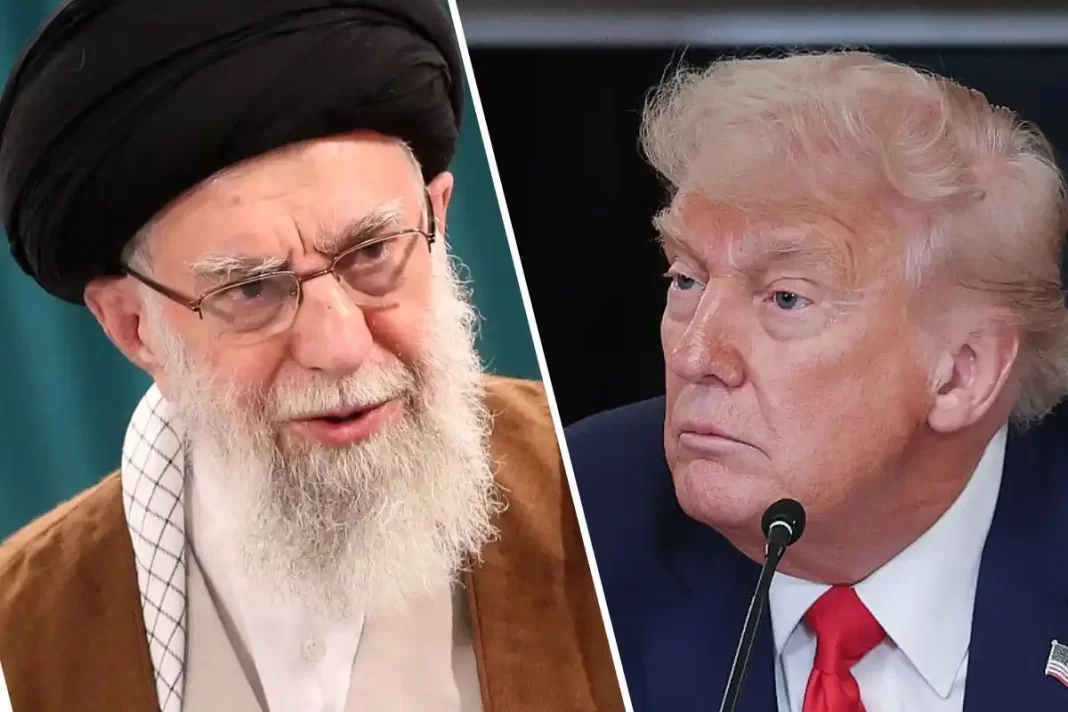

Iran After the Ayatollah: A Christian Perspective on the US-Israeli Strikes
How should American Christians think about the recent events in Iran, where US and Israeli forces have launched a military strike with the stated aim of overthrowing the Islamist regime?
On Saturday night, President Donald Trump announced that Iranian Supreme Leader Ayatollah Khamenei had been killed in a targeted strike. This was later confirmed by Iranian state media. This comes after months of violent crackdowns on anti-government protests, during which Iran’s theocratic regime reportedly killed tens of thousands of its own citizens.
A Biblical and Historical Perspective
Iran, historically known as Persia, is one of the few nations mentioned in the Bible that still exists today. It occupies a pivotal location at the crossroads of the world, bordered by Russia to the north, Pakistan and Afghanistan to the east, Iraq and Turkey to the west, and the Persian Gulf to the south.
The Bible mentions Persia as a key player in history and prophecy. In the book of Ezekiel 38:5, Persia is listed among the nations that will rise against Israel in the last days. However, Scripture also shows God’s redemptive plan for the Persian people. In the book of Esther, God used a Persian queen to save His people. In Daniel, Persian kings played a role in God’s sovereignty. And in Acts 2:9, Persians were present at Pentecost when the Holy Spirit was poured out.
Iran’s current troubles are rooted in its modern history. Many remember the 1979 revolution when Islamist followers of Ayatollah Ruhollah Khomeini overthrew the pro-US monarchy. The CIA-backed coup of 1953 had installed the shah, a pro-Western leader, but his autocratic rule and secularism alienated many Iranians. The revolution ushered in a theocratic dictatorship that has ruled with an iron fist for 47 years.
What Just Happened?
The recent US and Israeli strikes have been described as the most ambitious military operation in the region in decades. Early Saturday morning, the coordinated attack targeted key Iranian assets, including:
- IRGC (Islamic Revolutionary Guard Corps) command centers
- Iranian air defenses
- Nuclear facilities
- Missile and drone launch sites
- Ayatollah Khamenei’s personal compound
The strikes resulted in the death of Supreme Leader Ayatollah Khamenei, as well as other top Iranian officials, including the Iranian defense minister and IRGC commander. President Trump has vowed that the strikes will continue until “peace throughout the Middle East and the world” is achieved.
How Are the Iranian People Responding?
While the mainstream media focuses on the geopolitical implications, videos from Tehran and other cities show Iranians celebrating in the streets. The Iranian diaspora in London has also expressed joy and hope at the news of Khamenei’s death.
For decades, the Iranian people have suffered under a regime that has ruled through murder, torture, and repression. Since December, an estimated 30,000 protesters have been killed for opposing the government. This level of violence has led to widespread disillusionment with the theocratic regime.
The revolution of 1979 initially had widespread support, but as the mullahs consolidated power, they replaced the shah’s authoritarian rule with their own brand of repression. The result has been a collapse in religious belief, as Islam has become associated with the regime’s corruption and brutality.
What Happens Next?
With Khamenei gone, Iran faces an uncertain future. Possible scenarios include:
- A Democratic Transition: The best-case scenario would see the Iranian people establish a democratic government that respects human rights and re-engages with the global community.
- Another Dictatorship: A new authoritarian regime could emerge, possibly led by the military or remnants of the IRGC.
- Prolonged Chaos: A power vacuum could lead to instability, allowing extremist groups or factions to exploit the situation.
The exiled crown prince, Reza Pahlavi, has already celebrated Khamenei’s death and called for the end of the Islamic Republic. Some view him as a potential leader for a constitutional monarchy, but it remains to be seen whether he has enough support within Iran.
Spiritual Lessons for Christians
As American Christians, we must view these events through a biblical lens. Here are some key spiritual lessons we can learn from Iran’s history and current crisis:
- The Danger of Theocracy
History shows that when religion is enforced by the state, it often leads to corruption and the destruction of genuine faith. Iran’s mullahs have used religion to justify their tyranny, leading many Iranians to reject faith altogether. As Christians, we must guard against the temptation to mix faith with political power in ways that compromise the Gospel. - The Need for Spiritual Purpose
The 1979 revolution shows how spiritual emptiness can lead people to embrace dangerous ideologies. The shah’s secular government failed to provide a sense of purpose, which allowed the mullahs to fill the void with religious extremism. We must remember that people will always seek meaning in their lives—and it is the Gospel, not political ideology, that offers true hope. - God’s Sovereignty Over Nations
Scripture reminds us that God is sovereign over all nations and rulers. Psalm 103:6 says, “The Lord works righteousness and justice for all the oppressed.” While we may not know what the future holds for Iran, we can trust that God’s justice will ultimately prevail.
How Should Christians Respond?
As we watch these historic events unfold, it’s crucial for American Christians to respond with prayer and discernment. Here are five ways we can pray:
- Pray for the Iranian People
Pray for their deliverance from tyranny and for their safety during this time of upheaval. Many Iranians are longing for freedom and peace after decades of suffering.“Seek the peace and prosperity of the city to which I have carried you into exile. Pray to the Lord for it, because if it prospers, you too will prosper.” (Jeremiah 29:7) - Pray for Israel’s Protection
Iran has long been one of Israel’s most dangerous adversaries, funding terrorism and calling for its destruction. Pray for God’s continued protection of His chosen people.“Pray for the peace of Jerusalem: ‘May those who love you be secure.’” (Psalm 122:6) - Pray for Wisdom for Leaders
President Trump and Israeli Prime Minister Benjamin Netanyahu are making decisions that will shape the Middle East for decades to come. Pray that God grants them wisdom and guidance.“I urge, then, first of all, that petitions, prayers, intercession and thanksgiving be made for all people—for kings and all those in authority, that we may live peaceful and quiet lives in all godliness and holiness.” (1 Timothy 2:1-2) - Pray for Minimal Casualties
War is devastating. Pray that the ongoing military operations achieve their objectives with minimal loss of life, especially among innocent civilians. - Pray for a Peaceful Transition
The fall of oppressive regimes often leads to chaos, as we’ve seen in Iraq and Libya. Pray that Iran’s transition will be swift and peaceful, resulting in a government that respects human rights and freedom.
A Call to Faithfulness
Iran’s tragic history serves as a warning to all nations, including our own. When religion is corrupted by political power, it loses its ability to transform hearts and lives. As Christians, our primary allegiance is to Christ, not to any political ideology or government.
Let us pray for peace, justice, and the flourishing of the Gospel in Iran and throughout the world. May the Iranian people experience freedom, and may God’s love and truth shine brightly in the midst of this dark time.
Sources:
- Washington Post: Trump administration stated aim of regime change
- New York Times: Trump announces Khamenei’s death
- Associated Press: Iranian state media confirms Khamenei’s death
- The Guardian: 32,000 protesters killed since December
- Christianity Today: Christians killed in Iran protests
- Foundation for Defense of Democracies: Strategic analysis
- CBS News: Iran-US-Israel attack
Let us continue to pray and watch as this historic moment unfolds. If you’d like further insights or updates, feel free to ask.