


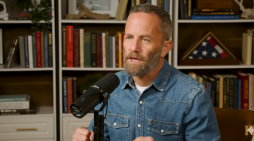
 (Christian News Network) —Kirk Cameron Doubles Down on Hell Controversy—and Misses the Point Entirely
Kirk Cameron is upset. After sparking backlash for publicly embracing annihilationism on his Dec. 3 podcast with his son James, Cameron released a follow-up episode titled “Did I Change My Mind?” on Dec. 17. In it, he bemoans “public shaming,” accuses critics of mischaracterizing him, and frames the whole controversy as brave truth-seeking versus closed-minded tradition.
Here’s the problem: Cameron isn’t being persecuted for asking questions. He’s being corrected for teaching error.
On the original episode, Cameron and his son both said they “lean toward” annihilationism—the belief that unbelievers simply cease to exist rather than face eternal conscious torment. Their key argument? A just God wouldn’t subject “finite humans to infinite punishment.” Sounds compassionate. It’s also flatly unbiblical.
The response was swift. Dr. Albert Mohler called revising hell “tampering with the gospel.” Apologist Wesley Huff labeled Cameron’s view “unorthodox” (though stopped short of “heretical”). And Cameron? He’s now claiming he was just “acknowledging uncertainty” and inviting “careful, prayerful study.”
But Scripture isn’t uncertain on this.
Jesus used the same Greek word—aionios—for both eternal life and eternal punishment (Matthew 25:46). Revelation 14:11 says “the smoke of their torment rises for ever and ever.” Mark 9:48 describes hell as a place “where the worms that eat them do not die, and the fire is not quenched.” Christ spoke more about hell than anyone in Scripture—and He didn’t leave wiggle room.
Cameron complains that critics didn’t watch the full episode “in context” and that “reaction videos” got more views than his original podcast. Maybe. But the issue isn’t tone or editing. It’s theology. When you publicly teach that hell might not be eternal, you’re not exploring—you’re revising. And the Church has rejected annihilationism for 2,000 years, not out of cruelty, but out of fidelity to Scripture.
Cameron says, “When certain questions may not be asked, Scripture quietly becomes secondary to tradition.” That’s backwards. Tradition exists to guard Scripture—not replace it. The historic doctrine of eternal conscious torment isn’t a man-made add-on. It’s the overwhelming testimony of Jesus, the apostles, and the early church. To call that “tradition” is to misunderstand what orthodoxy even is.
Yes, hell is grievous. Yes, it should provoke questions. But honest questions don’t require public platforms teaching unorthodox conclusions as viable options. Especially when you have influence. Cameron sought counsel beforehand—good. One adviser warned he’d be misunderstood. He wasn’t misunderstood. He was heard clearly.
The doctrine of hell matters because it reveals the infinite offense of sin, the holiness of God, and the terrifying reality from which the Gospel rescues us. Soften hell, and you gut the urgency of salvation. That’s not shaming. That’s shepherding.
Watch Cameron’s response here: “Did I Change My Mind?” – The Kirk Cameron Show
Your turn: How should Christians respond when public figures promote unbiblical teaching? And how does a right understanding of hell shape our compassion and mission?
(Christian News Network) —Kirk Cameron Doubles Down on Hell Controversy—and Misses the Point Entirely
Kirk Cameron is upset. After sparking backlash for publicly embracing annihilationism on his Dec. 3 podcast with his son James, Cameron released a follow-up episode titled “Did I Change My Mind?” on Dec. 17. In it, he bemoans “public shaming,” accuses critics of mischaracterizing him, and frames the whole controversy as brave truth-seeking versus closed-minded tradition.
Here’s the problem: Cameron isn’t being persecuted for asking questions. He’s being corrected for teaching error.
On the original episode, Cameron and his son both said they “lean toward” annihilationism—the belief that unbelievers simply cease to exist rather than face eternal conscious torment. Their key argument? A just God wouldn’t subject “finite humans to infinite punishment.” Sounds compassionate. It’s also flatly unbiblical.
The response was swift. Dr. Albert Mohler called revising hell “tampering with the gospel.” Apologist Wesley Huff labeled Cameron’s view “unorthodox” (though stopped short of “heretical”). And Cameron? He’s now claiming he was just “acknowledging uncertainty” and inviting “careful, prayerful study.”
But Scripture isn’t uncertain on this.
Jesus used the same Greek word—aionios—for both eternal life and eternal punishment (Matthew 25:46). Revelation 14:11 says “the smoke of their torment rises for ever and ever.” Mark 9:48 describes hell as a place “where the worms that eat them do not die, and the fire is not quenched.” Christ spoke more about hell than anyone in Scripture—and He didn’t leave wiggle room.
Cameron complains that critics didn’t watch the full episode “in context” and that “reaction videos” got more views than his original podcast. Maybe. But the issue isn’t tone or editing. It’s theology. When you publicly teach that hell might not be eternal, you’re not exploring—you’re revising. And the Church has rejected annihilationism for 2,000 years, not out of cruelty, but out of fidelity to Scripture.
Cameron says, “When certain questions may not be asked, Scripture quietly becomes secondary to tradition.” That’s backwards. Tradition exists to guard Scripture—not replace it. The historic doctrine of eternal conscious torment isn’t a man-made add-on. It’s the overwhelming testimony of Jesus, the apostles, and the early church. To call that “tradition” is to misunderstand what orthodoxy even is.
Yes, hell is grievous. Yes, it should provoke questions. But honest questions don’t require public platforms teaching unorthodox conclusions as viable options. Especially when you have influence. Cameron sought counsel beforehand—good. One adviser warned he’d be misunderstood. He wasn’t misunderstood. He was heard clearly.
The doctrine of hell matters because it reveals the infinite offense of sin, the holiness of God, and the terrifying reality from which the Gospel rescues us. Soften hell, and you gut the urgency of salvation. That’s not shaming. That’s shepherding.
Watch Cameron’s response here: “Did I Change My Mind?” – The Kirk Cameron Show
Your turn: How should Christians respond when public figures promote unbiblical teaching? And how does a right understanding of hell shape our compassion and mission?
Kirk Cameron doubles down, defends annihilationist view while others cite biblical warnings of eternal torment
- Advertisement -
- Advertisement -
