
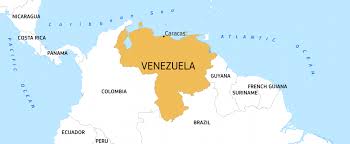

The world is witnessing a surge of protests against the United States following its controversial military operation in Venezuela, which led to the capture of President Nicolás Maduro and First Lady Cilia Flores. Demonstrators across the globe have condemned the intervention, citing violations of international law and fears of regional destabilization. As tensions rise, U.S. President Donald Trump has added fuel to the fire by issuing a stark warning to Venezuela’s Vice President, Delcy Rodríguez, who is now serving as the country’s interim leader. Trump declared that Rodríguez would face consequences “bigger than Maduro” if she refuses to cooperate with Washington, further intensifying the political and moral complexities surrounding this crisis.
Protests Against U.S. Intervention: A Global Outcry
The U.S. military operation in Venezuela has provoked fierce backlash worldwide. Protesters in cities like Washington, D.C., London, and Buenos Aires have taken to the streets, chanting slogans against war and imperialism. Many view the operation as an illegal act of aggression, accusing the U.S. of violating Venezuela’s sovereignty and setting a dangerous precedent for future interventions.
The protests are not only fueled by political concerns but also by humanitarian fears. Venezuela has been in the throes of a devastating economic and social crisis for years, with millions of citizens fleeing the country in search of safety and stability. Critics of the U.S. operation worry that the removal of Maduro will exacerbate the crisis, leading to further suffering for ordinary Venezuelans. Religious leaders have joined the chorus of dissent, emphasizing the need for peace and diplomacy over military force.
Trump’s Threat to Vice President Delcy Rodríguez
As the situation in Venezuela remains tense, President Trump has made headlines with a controversial statement directed at Delcy Rodríguez, who has assumed the role of interim president following Maduro’s capture. Trump warned that Rodríguez would “pay a very big price, probably bigger than Maduro,” if she does not cooperate with the U.S. and align with its interests. This threat has drawn condemnation from both Venezuelan officials and global leaders, who see it as an attempt to strong-arm the struggling nation into submission.
Rodríguez, a longtime ally of Maduro, has publicly denounced the U.S. operation, describing it as a “cowardly kidnapping” and vowing to defend Venezuela’s sovereignty. Her defiance has further strained relations between Caracas and Washington, raising concerns about the potential for further conflict. For many, Trump’s remarks are a stark reminder of the challenges of navigating the intersection of politics, power, and morality.
A Faith-Based Perspective: Justice, Mercy, and the Danger of Hubris
From a Christian perspective, the unfolding crisis in Venezuela and the global response to the U.S. intervention present an opportunity for reflection on the principles of justice and mercy. While Scripture calls us to stand against injustice and defend the oppressed, it also warns against the dangers of pride and the misuse of power.
Proverbs 16:18 reminds us, “Pride goes before destruction, a haughty spirit before a fall.” In threatening Vice President Rodríguez, President Trump risks alienating not only Venezuela but also the international community. His words and actions could be interpreted as an overreach of power, undermining the credibility of the U.S. and its stated commitment to justice.
At the same time, the situation in Venezuela highlights the importance of mercy and reconciliation. Micah 6:8 calls us to “act justly and to love mercy and to walk humbly with your God.” While Maduro’s regime undoubtedly caused immense suffering, the path forward must prioritize healing and unity over retribution and division. This includes respecting the sovereignty of nations and seeking solutions that promote peace rather than conflict.
The Role of the Church: Advocacy and Action
In the face of global protests and political tensions, the Church has a unique role to play. As followers of Christ, we are called to be peacemakers and advocates for justice. This means speaking out against actions that undermine peace and dignity, while also supporting efforts to address the root causes of suffering in Venezuela.
Faith-based organizations have already been at the forefront of providing humanitarian aid to Venezuelan refugees, offering food, shelter, and spiritual support. These efforts must continue and expand, particularly in light of the ongoing crisis. Churches can also serve as spaces for dialogue and reconciliation, bringing together people from different backgrounds to work toward a shared vision of peace and justice.
Balancing Faith and Politics: A Delicate Dance
The protests against the U.S. operation in Venezuela and Trump’s threats to Delcy Rodríguez underscore the challenges of balancing faith and politics. As Christians, we are called to engage with the world while remaining rooted in our values. This means asking difficult questions about the morality of political actions and advocating for policies that align with the teachings of Christ.
The Bible offers wisdom that can guide us in these uncertain times. In Romans 12:18, Paul writes, “If it is possible, as far as it depends on you, live at peace with everyone.” This verse reminds us of the importance of seeking peace, even in the midst of conflict. It also challenges us to consider how our actions—both as individuals and as nations—can contribute to a more just and peaceful world.
Conclusion: A Call to Hope and Healing
The U.S. operation in Venezuela and the protests that have followed are a stark reminder of the complexities of justice and the challenges of pursuing peace in a broken world. Yet, as Christians, we are people of hope. We believe in a God who can bring beauty from ashes and who calls us to be agents of healing and reconciliation.
In this critical moment, let us commit to prayer and action. Let us pray for the leaders of Venezuela, the United States, and the international community, asking God to grant them wisdom, compassion, and a commitment to justice. Let us also pray for the Venezuelan people, who have endured immense suffering and now face an uncertain future.
Finally, let us take action to support those in need, advocate for peace and justice, and work toward a world that reflects God’s kingdom. In doing so, we can be a light in the darkness, offering hope and healing to those who need it most.