


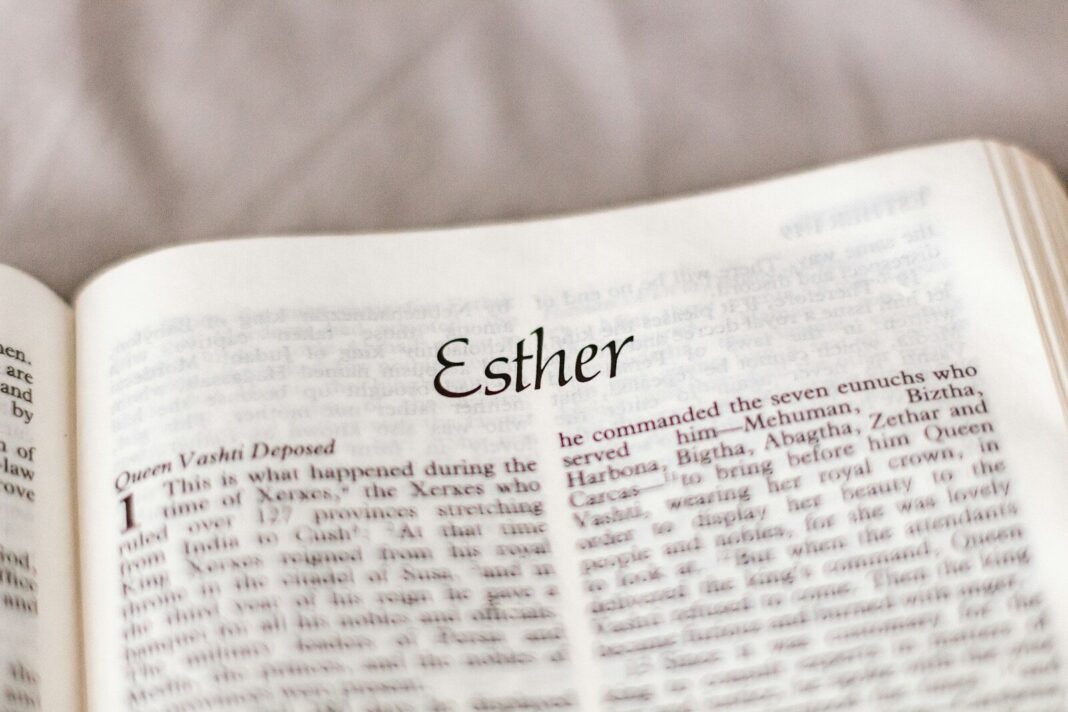

This week, as missiles rained down on Jerusalem for the first time in modern memory, Jewish families around the world were lighting candles, dressing up in costumes, and reading the Book of Esther. The timing? Let’s just say no one missed the connection.
While the joint US-Israel military operation against Iran unfolded, Jews were celebrating Purim—the ancient feast that marks Queen Esther’s rescue of the Jewish people from Haman of Persia. For Israelis hunkered down in bomb shelters, hearing air raid sirens in real time, that 2,500-year-old story didn’t feel like something you’d only find in a dusty scroll. It felt eerily familiar—like history was holding up a mirror.
Mike Cosper, host of Christianity Today’s The Bulletin, sat down with Yossi Klein Halevi—a journalist and senior fellow at the Shalom Hartman Institute in Jerusalem—to unpack how Israelis are processing this moment through the lens of Scripture. What follows is a summary of their conversation, with a few key excerpts that hit me right in the soul.
“Here We Are Back With the Persians Again”
Halevi described the mood in Israel as a complicated cocktail of resolve, exhaustion, and grief.
“People are ready to make lots of sacrifices to bring this regime down,” he said. “On the other hand, there’s deep disorientation and fatigue—and still a society that’s quietly grieving.”
Israel has lost thousands of people since October 7, 2023. Thousands more have been wounded. And now, with Iran firing missiles into East Jerusalem, a new front has opened.
That missile launch felt like a gut punch to many Israelis. For decades, there was an unspoken rule in Middle Eastern conflicts: no one would dare risk destroying Al-Aqsa mosque or the Dome of the Rock. Iran shattered that rule overnight.
“The regime is fighting for its life,” Halevi said. “And it’s desperate.”
Purim, Persia, and the Pattern of Jewish History
What makes this moment theologically striking—whether you’re watching from Jerusalem or your couch—is the calendar.
On the opening night of the operation, Israeli Defense Forces Commander Lt. Gen. Eyal Zamir addressed the nation and invoked the story of Purim directly. Politicians, military leaders, and everyday Israelis are all reaching for the same ancient text to make sense of what’s happening.
“Every Israeli understands the resonance of a war against modern Persia—modern-day Iran—led by a modern Haman,” Halevi explained. “That’s the given language of discourse here.”
He described it as a kind of Groundhog Day—but with missiles.
“Here we are, 2,500 years after the Purim story… sometimes not just themes but literal reenactments.”
The Hidden God of the Book of Esther
Here’s a theological nugget that might surprise you: God’s name never appears in the Book of Esther. Not once.
Cosper brought this up, and Halevi responded with a beautiful piece of rabbinic insight. The name Esther in Hebrew shares its root with the word hester—which means hiddenness. The phrase hester panim means “God’s face is hidden.”
“One can discern in the Book of Esther this uncanny series of coincidences that leads to a redemptive trajectory,” Halevi explained.
The providence is real. The hand is there. But it works through timing, through courage, through ordinary people stepping into extraordinary moments—not through parting seas or fire from the sky.
Mordecai’s famous words to Esther carry the full weight of this tension:
“Who knows if you didn’t rise to your status for a time like this?”
Halevi framed it as the collision of two forces that define Jewish history:
- Fate—what is imposed on you
- Destiny—what you choose for yourself
“There is this convergence of fate and destiny at this moment in Israel’s history,” Halevi said.
What Could Come Next — A Christian Angle Worth Watching
Toward the end of their conversation, Halevi shared something that might catch Christian readers off guard.
If the Iranian regime falls, he believes it could spark a remarkable religious transformation inside Iran:
- A resurgence of Zoroastrianism and the Baha’i faith—Iran’s indigenous pre-Islamic traditions.
- The potential return of Jewish communities to Persian soil.
- And perhaps most striking—a tremendous flowering of Christianity.
“To leave Islam and convert to another faith carries with it a death sentence,” Halevi noted. “So you’re looking at a heroic nucleus of a Christian resurgence there.”
For years, the underground church in Iran has been quietly growing under extraordinary persecution. If the regime that has hunted them collapses, what happens next could be one of the most important stories of our time.
A Closing Thought for FaithSignal Readers
Let’s be honest: most of us grew up thinking of the Book of Esther as a children’s story. Costumes, noisemakers, a brave queen—it’s fun, right?
But read it again as an adult, especially in light of this week’s headlines, and it hits differently.
Esther is a story about God working invisibly through history. Through timing that feels too perfect to be coincidence. Through people who almost didn’t act. Through threats that seemed unstoppable—until they weren’t.
Whether or not you see the current conflict as a direct parallel to ancient prophecy, here’s the takeaway: the same God who worked through Esther’s courage and Mordecai’s wisdom is still at work today.
His name just isn’t always in the byline.