


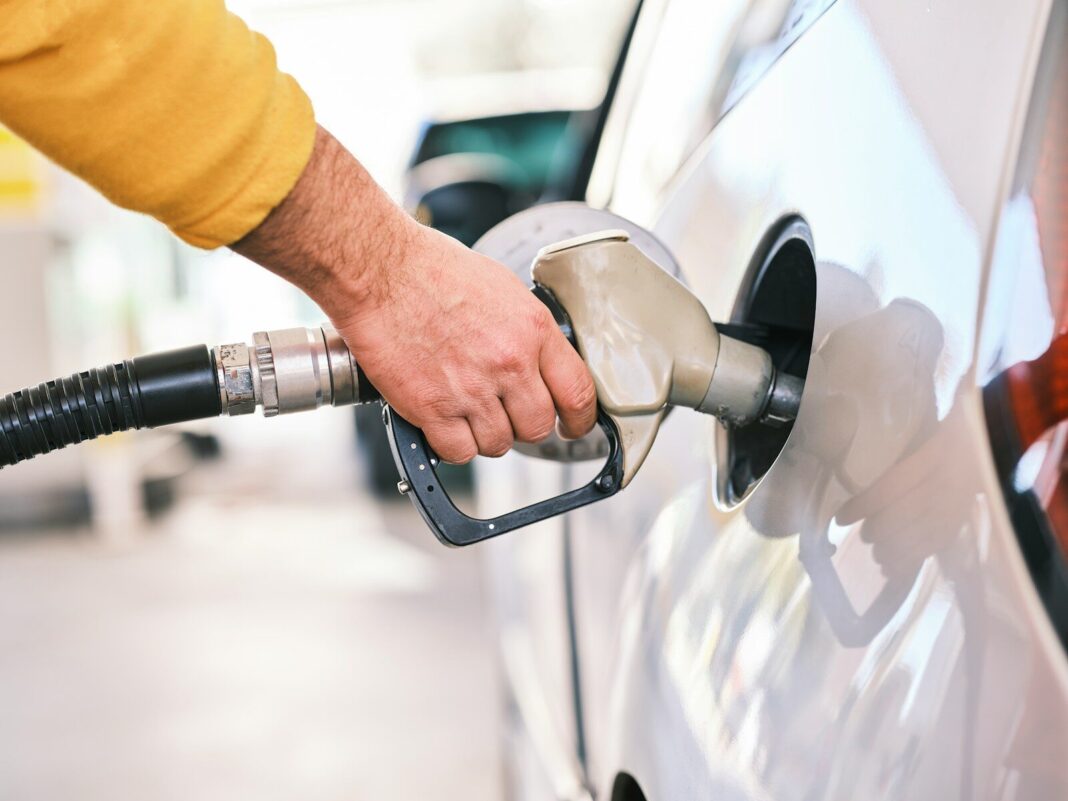

Top 7 Stages of Grief at the Gas Pump
A Completely Serious Scientific Study
This is dedicated to everyone who has ever stood at a gas pump, watched the numbers climb, and quietly reconsidered every life decision that led them to this moment. You are not alone. We see you. We are you.
Researchers have long documented the five stages of grief—denial, anger, bargaining, depression, and acceptance. With all due respect to those researchers, they clearly have never filled up a tank in 2026. Because at the gas pump, there are seven.
Allow me to walk you through them.
Stage 1: Denial
“It probably won’t be that bad today.”
It starts in the car. You pull into the gas station with the quiet, irrational confidence of someone who hasn’t checked gas prices in four days. Maybe it went down. Things go down sometimes. The economy does things. Good things. Sometimes.
You pull up to the pump. You glance at the price per gallon. You look away. You look back. That can’t be right. You check the pump next to you. Same number. You check the pump across from you. Same number.
You briefly consider that perhaps all of these pumps are broken, displaying some kind of error—a glitch in the matrix, maybe?
They are not broken. That is the price. Welcome to denial.
Stage 2: Optimism
“I’ll just get half a tank.”
This is the bargaining that happens before the pumping, which is its own special category of self-deception.
You don’t need a full tank. You’ll just put in twenty dollars. Twenty dollars will get you through the week. You don’t drive that much. You work from home three days. You consolidate errands. Twenty dollars will be fine.
You start pumping. Twenty dollars comes and goes like a distant memory, like it was never even there. The tank is at a quarter. You did not get through the week on twenty dollars.
Stage 3: The Strategic Look Away
“I’m just going to focus on that bird over there.”
The pump is running. The numbers are climbing. And you make a conscious decision to look at literally anything else.
The sky. Beautiful sky today, actually. A bird on the power line. Fascinating bird. The gas station sign. Interesting font choice. Your own shoes. Good shoes. Solid purchase. Unlike this gas.
Some people check their phone. Some people clean their windshield with the squeegee, very thoroughly, taking their time. Anything. Anything but watching that number climb.
Stage 4: The Stranger Bond
“That person at Pump 4 understands me.”
This is the stage that turns a gas station into a community. You glance up from your strategic look away and make eye contact with the person at the pump across from you. They are also looking away from their pump.
Your eyes meet. No words are spoken. No words are needed. In that single moment, an entire conversation happens.
“This is a lot.”
“I know.”
“Are you okay?”
“Not really.”
“Me neither.”
“We’re going to be okay though.”
“Probably.”
“Yeah, probably.”
You nod. They nod. You are bonded now. Strangers no more. Survivors of the same experience.
Stage 5: The Negotiation
“Okay, so if I stop driving to certain places…”
This is where the mental math begins, and it gets creative. The pump is still running. The total is climbing. Your brain, desperate to regain some sense of control, launches a full financial restructuring plan.
If I work from home four days instead of three… If I stop going to that grocery store that’s slightly farther… If I combine all my errands into one trip on Saturdays… If I stop driving to the gym and just do something at home… Maybe I’ll get a jump rope. Jump ropes are cheap. This is actually a great idea.
Or I’ll carpool. Do I know anyone who goes the same direction? I could ask. People carpool. Or I’ll get a bike. People bike to work. It’s only eleven miles. That’s fine. Totally doable.
You are not getting a bike. But in this moment, it feels very possible.
Stage 6: The Moment of Truth
“I’m sorry—what is the final total?”
The pump clicks off. The pumping is done. The moment has arrived. You have been avoiding this number. You have looked at birds. You have bonded with strangers. You have planned an entirely new transportation lifestyle.
Now, there is nowhere left to look.
You look at the screen. You look at it again, as if looking a second time will change it. It does not change. You take the receipt. Why do you take the receipt? You never look at the receipt. You don’t need the receipt. You take it anyway.
It is a receipt for an amount of money that should come with a thank-you note. It does not come with a thank-you note.
Stage 7: Acceptance
“This is fine. Everything is fine. We are fine.”
You get back in your car. You sit for a moment. It’s fine. Gas costs what gas costs. You have a full tank. You can go places now. That has value. Mobility has value.
You start the car. The fuel gauge moves to full. And there it is—that tiny, irrational, completely disproportionate feeling of satisfaction. The tank is full. The week is almost over. It’s Friday. The sun is out. You have places to go.
You pull out of the gas station, past Pump 4, where your bonded stranger is also pulling out. You give them one final nod. They nod back. Godspeed, friend. Godspeed.
The Survival Rate Is Perfect
Good news: Everyone makes it through. Every single time.
The tank is full. The week is done. You made it. Now go somewhere worth the gas.