



Finding hope in uncertain times
By now, you’ve likely heard the news.
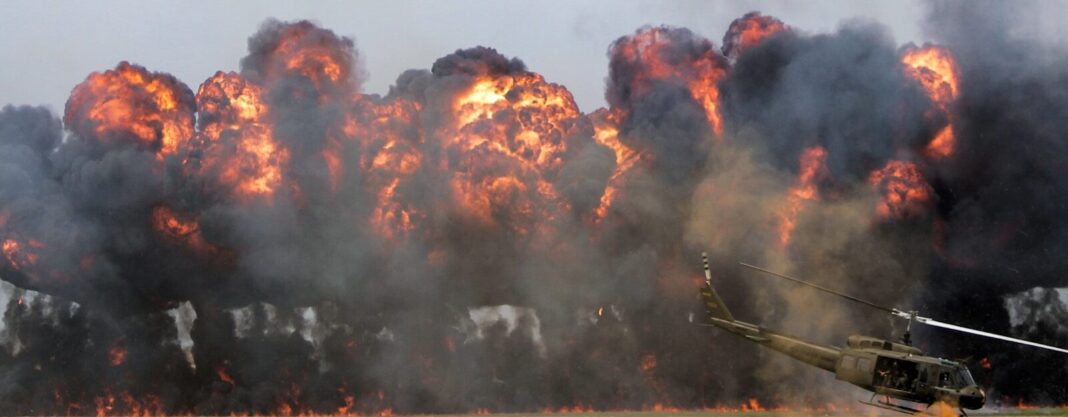
Early Saturday morning, U.S. and Israeli forces launched coordinated strikes on Iran. In response, Tehran retaliated with missile attacks. The casualties are rising, and the world is holding its breath, unsure of what’s coming next.
If you’re feeling anxious, confused, or afraid right now—please know you’re not alone.
As people of faith, moments like these can shake us to our core. How do we make sense of it? How do we respond when the world seems to be spinning out of control? Let’s take a moment to pause, breathe, and lean into what Scripture and our faith tradition teach us about navigating times of crisis.
First: Your Fear Is Valid
Let me start by saying this—whatever you’re feeling right now is okay.
Jesus himself felt anguish. He wept. He experienced fear, grief, and distress. Think of him in the garden of Gethsemane, praying so intensely that his sweat fell like drops of blood.
So if you’re scared today, that doesn’t mean you lack faith. It means you’re human.
If you’re angry, God can handle that too.
If you can’t even find the words to pray, remember that the Spirit intercedes for us with “groans too deep for words” (Romans 8:26). You don’t have to have it all figured out. You don’t have to be strong right now. You’re allowed to feel what you feel.
What Does Faith Teach Us in Crisis?
Throughout Scripture, God’s people faced moments of war, uncertainty, and fear:
- The Israelites stood at the edge of the Red Sea, trapped between Pharaoh’s army and the water.
- Daniel lived faithfully in Babylon, under a foreign power hostile to his beliefs.
- The early Christians endured persecution under Roman rule.
- Even Jesus was born into occupied territory, under the constant threat of violence.
What did they do in those moments?
They didn’t pretend everything was fine.
They didn’t ignore the danger.
They didn’t try to spiritualize away the real threats.
Instead, they:
- Acknowledged the Reality
The Psalms are full of raw honesty. “How long, O Lord? Will you forget me forever?” (Psalm 13:1). God doesn’t ask us to hide our fear—He invites us to bring it to Him. - Brought Their Fears to God
“My heart is in anguish within me; the terrors of death have fallen on me. Fear and trembling have beset me; horror has overwhelmed me” (Psalm 55:4-5). The psalmist doesn’t sugarcoat his feelings. He lays them bare before God. - Trusted God’s Sovereignty
“God is our refuge and strength, an ever-present help in trouble. Therefore we will not fear, though the earth give way and the mountains fall into the heart of the sea” (Psalm 46:1-2). Even when the world feels like it’s crumbling, God remains steady. - Acted with Wisdom
“The prudent see danger and take refuge, but the simple keep going and pay the penalty” (Proverbs 27:12). Faith doesn’t mean ignoring reality—it means responding wisely to real threats. - Prayed for Their Enemies
“But I tell you, love your enemies and pray for those who persecute you” (Matthew 5:44). This is one of the hardest teachings of our faith, but it’s also one of the most powerful. - Worked for Peace
“Blessed are the peacemakers, for they will be called children of God” (Matthew 5:9). Even when peace feels impossible, we’re called to pursue it with all our hearts.
So What Do We Do Today?
Here are some practical ways to live out our faith in this moment:
- Pray—But Pray Specifically
Instead of just saying, “God, fix this,” let’s pray with intention.
- Pray for leaders to choose wisdom over ego, peace over power.
- Pray for Iranian civilians caught in the crossfire of decisions they didn’t make.
- Pray for the safety of Israeli and American military personnel and their families.
- Pray for protection of the innocent on all sides.
- Pray for peace—even when it feels impossible.
- Resist Fear-Mongering
Faith and fear can’t coexist in the same space.
That doesn’t mean we ignore reality. It means we don’t let fear take the driver’s seat in our decisions, words, or hearts.
Here’s how:
- Turn off the 24-hour news cycle if it’s feeding your anxiety.
- Limit time on social media if it’s fueling panic or rage.
- Choose balanced news sources.
- Talk to wise, grounded people about your feelings.
- Don’t share every alarming headline—be thoughtful about what you spread.
- Remember: God Is Not Surprised
No matter what happens next, God isn’t caught off guard.
That doesn’t mean He caused this. It doesn’t mean He wanted this.
It means He’s present in it.
The same God who walked with His people through exile, occupation, and war is with us now. He hasn’t abandoned us—or the world.
- Be a Calming Presence
In your home, your workplace, your community—be the person who doesn’t panic.
Not because you’re ignoring what’s happening, but because your hope is anchored in something deeper than the headlines.
Your calm can be a gift to others who feel like the world is spiraling.
- Don’t Demonize
It’s easy to turn “the other side” into villains. But as people of faith, we’re called to see the humanity in everyone—even those we disagree with.
This doesn’t mean ignoring real threats. But it does mean resisting the urge to dehumanize others.
A Word About Prophecy and “End Times”
Some may interpret these events through the lens of biblical prophecy—wars and rumors of wars, signs of the end times.
A word of caution: Every generation has believed they were living in the last days. Every major conflict has been seen as the beginning of the end.
Jesus said, “About that day or hour no one knows, not even the angels in heaven, nor the Son, but only the Father” (Matthew 24:36).
Our job isn’t to predict the future. Our job is to be faithful today—to love our neighbors, work for peace, and trust God with tomorrow.
Where Do We Go From Here?
I don’t know what happens next.
I don’t know if this conflict will escalate or if peace will prevail.
What I do know is this: God has walked with His people through worse.
Through exile in Babylon. Through Roman occupation. Through persecution and martyrdom. Through two world wars and countless other tragedies.
And every time, the people of faith who made the biggest difference were those who:
- Refused to give in to fear
- Prayed with persistence
- Acted with compassion
- Worked for peace
- Held onto hope
That is our calling today.
Not to have all the answers.
Not to fix everything.
Not to pretend we’re not scared.
But to be people of faith in a fearful world.
To be people of peace in a violent world.
To be people of hope in a despairing world.
A Prayer for Today
God of peace,
We don’t understand what’s happening.
We’re scared of what might come next.
We’re angry at the decisions that brought us here.
We’re heartbroken for those who will suffer.
But we trust that You are present—even in this.
Give wisdom to leaders who hold power.
Protect the innocent on all sides.
Comfort those who are afraid.
Restrain those who would escalate violence.
Open doors for peace that seem closed.
And use us—somehow, in whatever small ways we can—as instruments of Your peace.
Help us to be steady when others panic.
Help us to be compassionate when others harden their hearts.
Help us to be hopeful when others despair.
We don’t know what tomorrow holds.
But we know who holds tomorrow.
In the name of the Prince of Peace,
Amen.
Stay Connected
In times like these, we need each other more than ever.
Don’t isolate yourself. Don’t sit alone with your fear. Reach out to your community, talk to trusted friends, and process your feelings with people who can support you.
We’ll get through this together.
With faith. With hope. With each other.