
During the Cold War era, a new term entered the political lexicon: anti-anti-Communist. People needed a handy label for Westerners who seemed oddly fixated on decrying the Soviet Union’s enemies rather than the Soviet Union itself.
Nowadays, as each new “book ban” kerfuffle erupts at local schools and libraries, there are moments when I’m tempted to classify myself as anti-anti-censorship.
Not, mind you, out of any ambivalence in my commitments to books and free expression. I want more books in the world, more conversations about them, more attention paid. And I abhor the thought of prissiness about language and ideology deterring encounters with challenging literature and unpopular perspectives.
Yet for all my kinship with anti-censorship crusaders, I hesitate to treat them as comrades in arms. For one thing, the writer in me—the stickler for using words precisely—can’t abide their manner of blurring distinctions between localized complaints and blanket suppression. Witness the propaganda triumph of Banned Books Week, which rallies behind works that, however stigmatized in some quarters, are amply available to buy, distribute, or read aloud on any street corner.
I also have trouble abiding the habit among some censorship fighters of ridiculing opponents as narrow-minded dimwits. Yes, some parents and politicians go overboard in raising alarms about vulgar, violent, or sexualized material. But this hardly justifies the sort of sneering remarks once delivered by the novelist Kurt Vonnegut, who declared that such “lunks” are “too bloody stupid” to oversee “the educations of children in a free society.”
Writing in 1976, Vonnegut was addressing a censorship case from Long Island. The “lunks” in his crosshairs were school board members who’d voted to remove 11 volumes, including Vonnegut’s antiwar classic Slaughterhouse-Five, from circulation. The resulting conflict, which wound its way to the Supreme Court, sets the stage for Anthony Aycock’s Just Plain Filthy: The Story Behind Book Banning’s Trial of the Century.
A librarian and English teacher, Aycock leaves no doubt about where he stands: He regards the school board as badly wrongheaded and its challengers as plainly heroic. He worries that legal safeguards against censorship might soon crumble, inviting meddlesome officials with partisan agendas to choke off access to books that make us think—and make us sweat. And he’s a little too fond, for my taste, of quoting contemptuous broadsides like Vonnegut’s.
Yet he also counters the extremes and blind spots of anti-censorship zealots. He understands that libraries can’t shelve everything under the sun. He understands that progressives, no less than conservatives, bow before certain intellectual and literary taboos. He understands the arguments for parental and communal oversight, and for the most part he handles them without caricature.
Add to this a companionable tone—witty and engaging, even amid the arcana of court precedents and procedures—and you get a book I enjoyed more than I initially supposed. It’s bracingly thought-provoking. Even if, ultimately, I’ll reserve the right to keep that second anti- on my anti-censorship card.
related

On one level, Just Plain Filthy unfolds as a community and courtroom drama, centered on a First Amendment fracas that advanced through the courts as Island Trees School District v. Pico.
The Island Trees district represented a bundle of Long Island communities, including Levittown, that embodied a distinctive postwar marriage of suburban prosperity, traditional morality, and instinctive patriotism. As one party to the case told Aycock, “many of his friends and neighbors there were ‘as Archie Bunker as you can imagine.’”
To a large degree, the school board channeled these sensibilities. In the fall of 1975, three members attended a conference of conservative activists who’d compiled a list of books they deemed objectionable.
Then, to their dismay, the board discovered several offending volumes lurking on Island Trees shelves, including Richard Wright’s Black Boy, Eldridge Cleaver’s Soul on Ice, and a range of works dealing with drug use, racial tension, urban poverty, and other social conundrums muddying Levittown’s image of the American Dream. As Aycock concedes, the books also featured plenty of naughty language and graphic sexuality—to say nothing of Cleaver’s insistence that raping white women was “an insurrectionary act” of racial comeuppance.
In a press release Aycock quotes at length, school board chair Richard Ahrens defended the subsequent decision to cull these titles, which he branded “anti-American, anti-Christian, anti-Semitic, and just plain filthy.”
“We are in no way BOOK BANNERS or BOOK BURNERS,” Ahrens protested. “While most of us agree that these books have a place on the shelves of the public library, we all agree that these books simply DO NOT belong in school libraries.”
That might have satisfied some Levittowners, but not Steven Pico, the student council president at Island Trees High School who went on to become a doughty First Amendment defender. Pico partnered with the New York Civil Liberties Union to launch the litigation bearing his name. The school board won the first round in district court. Then Pico and his co-plaintiffs prevailed in federal appeals court. In the next appeal, the court split down the middle.
By 1982, the Supreme Court had agreed to step in. At the time, Aycock notes, “school library censorship was an unsettled area of law.” It remained unsettled afterward, as the justices issued a flurry of concurring and dissenting opinions. Pico’s lawyers persuaded a bare majority to rule against the school board. But even that majority divided on the constitutional rationale.
related


Aycock hopes a future court will tidy up and fortify the Island Trees ruling, clarifying beyond doubt that the First Amendment forbids public schools from purging books out of moral or political disapproval. Surveying our polarized landscape, he fears a cycle of red-and-blue one-upmanship. I worry about those dynamics too, but I also worry about his preferred legal fix.
That’s not to say I oppose it, exactly. As Aycock stresses, the Island Trees district rested its Supreme Court defense on the school board’s inherent prerogatives. To the extent possible, the district’s lawyer avoided mentioning why the books were banished. The point, he emphasized, was that school’s elected guardians get to decide what stays and goes.
But the justices asked some good follow-ups. If local autonomy matters most, then what prevents a school from weeding out entire viewpoints? I can’t say I’m comfortable with students lacking anyFirst Amendment recourse against the prospect, however remote, of micromanaging tyrants ransacking the library.
I’m also uncomfortable, though, with federal free speech guarantees unduly tying the hands of local officials carrying a rightful mandate to shape their schools. Regional variation stretches the limbs and untenses the muscles of a divided society. We don’t need South Carolina’s libraries to look like San Francisco’s. As one Island Trees leader quipped after an early court clash, if you smother “the responsibility and authority to decide on curriculum,” there’s little left to do but “order pencils.”
related

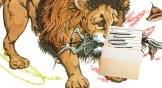
Woven throughout Aycock’s account of the Island Trees case is a broader survey and analysis of book censorship in America.
His historical vignettes are entertaining and disquieting in equal measure. We encounter figures like the notorious Anthony Comstock, who founded the New York Society for the Suppression of Vice and exploited his post-office perch to intercept materials he judged distasteful. We meet Albert Sidney Burleson, the segregationist postmaster general who shuttered newspapers accused of sowing disloyalty during World War I. We meet Norma and Mel Gabler, a Texas couple whose textbook-review cottage industry targeted “content they considered antifamily, anti-American and anti-God.”
Every so often, book battles have escalated from words to sticks and stones, as with Alice Moore, a school board firebrand in 1970s West Virginia. As Aycock reports, when fellow board members rejected her bid to reform district curricula along Gabler-esque lines, “shots were fired, cars and homes firebombed, schools dynamited and vandalized, and eleven protestors arrested.”
For all his attention to this historical parade of horribles, Aycock sounds several notes of moderation. “Not all pro-censorship arguments are meritless,” he writes, and “we can have a free society while still observing reasonable limits on expression.” He endorses protecting kids from internet pornography and regulating their social media access.
Even on the core matter of books, Aycock gives a little ground. Some books, he suggests, really do deserve censorship, because their ideas are execrable and they cause real-world harm. “I do not mean good books that become tainted by changing social norms or their creators’ misdeeds,” he clarifies. “I mean books whose fundamentals are an affront to any right-minded individual. Books that were, in a sense, born bad.” Among other examples, he cites titles linked to white supremacists and the Oklahoma City bomber Timothy McVeigh.
Aycock shrinks back, however, from recommending that libraries prune their stacks accordingly, and here we arrive at a tension in his argument: Sometimes he appeals to pragmatism, warning of slippery slopes to widespread censorship. Yet elsewhere he steers back toward the kind of principled objection you might expect from anti-censorship stalwarts: that restricting access to books is always counterproductive, no matter how well-intended.
I like a lot of what Aycock says in these sections: about letting children discover and grow, rather than sheltering them; about “askable” parents shepherding them through confusing and disturbing passages. But I’m not sure he resolves the underlying tension. Is censorship wrong because it sets a bad precedent? Or wrong because it’s wrong?
Nor am I sure that Aycock resolves an underlying problem with maximalist anti-censorship rhetoric in general: the nagging suspicion that it isn’t—that it can’t be—fully sincere.
In The Abolition of Man, C. S. Lewis wrote about debunkers of traditional values keeping their own sacred values coyly hidden. Champions of free expression can easily occupy the moral high ground, basking in applause for defending the right to read Huckleberry Finn or To Kill a Mockingbird. But almost everyone, I’d wager, maintains some red line, spoken or unspoken. Maybe it’s Christian nationalism. Or violent jihadism. Or QAnon lunacy. Whatever it is, we might as well come clean.
Aycock, to his credit, is refreshingly candid and nuanced in acknowledging his own limits—and admitting where he wavers. Still, I can’t help wanting to poke and prod, testing whether he sees how deep—into crudity, delusion, unspeakable evil—the literary rabbit hole really goes.


“Keep suing. Keep fighting.” Aycock closes with this battle cry, echoing the exhortation Kurt Vonnegut inscribed in Stephen Pico’s copy of Slaughterhouse-Five.
My anti-censorship side says, “Yes and amen.” We have our legal system for a reason. Sometimes public officials need stern reminders of what governments can and can’t do. Sometimes they need their feet held to the fire.
As for my anti-anti-censorship side, I suppose it might prefer something a touch less militant, namely some patience for the public process of sorting things out before rushing to the courts.
In nearly every conflict Aycock recounts, I instinctively align with the authors, publishers, librarians, and truth-seekers favoring a free marketplace of ideas. I want to reassure the concerned parents and activists about the value of omnivorous reading and vigorous debate. I want to tell the violent mobs to put their pitchforks down and go jump in a lake.
Even so, I’m not altogether scandalized by what transpired in Levittown. I think the board acted wrongly and often haphazardly. But mostly it made defensible judgment calls and gave defensible public explanations. Aycock himself allows that the board, however misguided, sincerely believed it was doing the right thing.
One fine feature of free societies is that we get to say whether we agree. Many people in Levittown and around the nation did just that. To me, this kind of spirited discourse—however fractious, however unsatisfying—offers a workable template for navigating today’s censorship controversies and those to come. With or without the First Amendment riding to the rescue, we can reason with our neighbors, and our leaders, about values worth promoting, rights worth protecting, and lines worth drawing.
Stephen Pico and his allies might win a few rounds. The concerned citizens groups might win a few others. In the meantime, take heart! Books remain abundant, and abundantly gettable. Anthony Comstock isn’t snooping around in anyone’s mailbox. Amazon is only a click away.
Keep reading. Keep debating.
Matt Reynolds is a writer and a former CT editor. He lives with his wife and son in the suburbs of Chicago.
The post Is Censorship Always Wrong or Merely Risky? appeared first on Christianity Today.