



And Why That Sentence Should Wake Every Believer Up
There is a sentence in Mihrigul Tursun’s testimony that refuses to let go.
Not the electric shocks. Not the black hood at the airport. Not even the three days she spent holding her infant son’s lifeless body, willing him back to life, refusing to believe he was gone.
All of it is devastating. All of it demands to be read slowly, honored, and not rushed past.
But the sentence that cuts deepest — the one that reaches the root of everything — is this one:
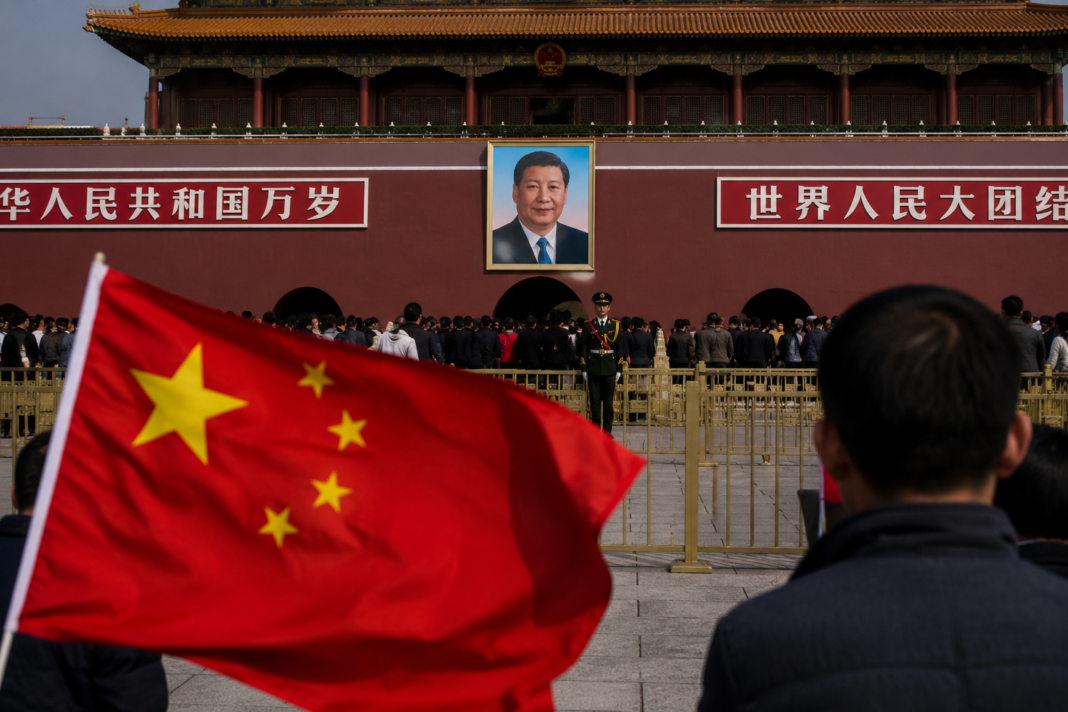
“Chinese Communist Party is God. Xi Jinping is God.”
This is what officers told her during an interrogation, after she declared that God would judge them for what they were doing to her.
They were not speaking metaphorically.
They were making a theological claim. The oldest one in human history. The claim that has appeared in different languages, uniforms, and centuries, every time a human system decides it has outgrown the need for anything above itself.
“We are the highest authority. There is nothing over us. Your faith is not just irrelevant — it is a threat.”
Mihrigul Tursun is 35 years old. She now lives in Washington, D.C., having lost her son, her health, and years of her life in a Chinese detention camp. She carries wounds that do not heal easily. She speaks publicly — at great personal cost, knowing her family members still live in China — because, as she puts it, “People think this only happened in history. But it is still happening.”
She is right.
And the church — the global church, the Western church, the church that can read these words this morning without fear — needs to sit with that sentence until it lands.
“Chinese Communist Party is God. Xi Jinping is God.”
📖 This Is Not a New Story
“Nebuchadnezzar said to them, ‘Is it true, Shadrach, Meshach and Abednego, that you do not serve my gods or worship the image of gold I have set up? Now when you hear the sound of the horn, flute, zither, lyre, harp, pipe and all kinds of music, if you are ready to fall down and worship the image I made, very good. But if you do not worship it, you will be thrown immediately into a blazing furnace. Then what god will be able to rescue you from my hand?'”
— Daniel 3:14-15
The structure has not changed in three thousand years.
A human system consolidates power. It builds an image — whether literal or ideological — and demands worship. It frames compliance as reasonable and resistance as dangerous. It offers a simple transaction: bow, and you will survive. Refuse, and you will burn.
Nebuchadnezzar did not think he was being unreasonable. He believed he was maintaining order. He saw the golden image as a unifying symbol, an expression of loyalty to his reign.
He saw Shadrach, Meshach, and Abednego as dangerously defiant.
The Chinese Communist Party does not think it is being unreasonable either. The detention camps in Xinjiang are described as “vocational training centers aimed at combating extremism.” Surveillance, forced indoctrination, and the erasure of Uyghur language, faith, and culture are framed as measures of stability and security.
The language changes. The structure does not.
Bow, or burn.
And yet, three young men stood before Nebuchadnezzar and spoke words that have echoed across centuries, through every generation of believers who have faced the same ultimatum:
“We do not need to defend ourselves before you in this matter. If we are thrown into the blazing furnace, the God we serve is able to deliver us from it… But even if he does not, we want you to know, Your Majesty, that we will not serve your gods or worship the image of gold you have set up.”
— Daniel 3:16-18
“Even if He does not.”
Not a prosperity gospel. Not a promise of rescue. Not a bargain.
Just this: there is something above you. And we will not pretend otherwise.
Even now.
🔍 What Authoritarian Systems Always Do
They Make a Theological Claim First
Every authoritarian system — without exception — eventually demands more than outward compliance.
It demands the interior. The conscience. The place where a human being decides what is ultimately true and worthy of their loyalty.
Because as long as someone believes in something higher than the state — something that can judge it, something it cannot control — that person cannot be fully subdued.
Faith is not just a private comfort. It is a political fact.
This is why every serious authoritarian system, sooner or later, comes for faith.
The Roman Empire demanded emperor worship not because Caesar needed flattery, but because worship was a declaration of ultimate loyalty. The Soviet Union didn’t just suppress the church; it sought to replace it with the mythology of state salvation. Mao’s Cultural Revolution didn’t merely dismantle temples; it sought to redirect human longing for the divine toward the Party.
And in a detention camp in Xinjiang, when Mihrigul Tursun told her captors that God would judge them, they responded:
“Chinese Communist Party is God. Xi Jinping is God.”
They knew exactly what they were doing.
The question is — do we?
They Reframe Resistance as Extremism
This is the move that should unsettle Western believers the most.
When a system declares itself the highest authority, anyone who claims a higher one becomes suspect. Not necessarily a criminal. Not necessarily a threat. But someone to monitor. Someone who might need correction.
The Uyghurs were not detained for violence. They were detained for prayer. For fasting. For teaching their children their language and their faith.
The Party called it “extremism.”
The word is doing a lot of work there. And it’s worth asking — in any society, in any era — who gets to define that word, and what happens to the people it’s used against.
They Come for the Children First
Mihrigul Tursun was sent to a Mandarin-language school at age ten.
“They educate us as Chinese mind,” she said.
The children first. Always the children first.
Because a generation raised without language, faith, or memory is a generation that won’t resist.
This is why the transmission of faith — from parent to child, from elder to youth, from story to story — is not just a spiritual act.
It is an act of resistance.
🔥 The Uncomfortable Question for the Western Church
It is easy to be outraged by what is happening in Xinjiang. It should outrage us. It should move us to prayer, advocacy, and action.
But the prophetic tradition doesn’t just ask, “What’s happening over there?”
It also asks, “What are we quietly bowing to over here?”
Not with detention camps or forced indoctrination. The Western version is subtler, more comfortable, harder to name.
But the structure is the same.
What are you bowing to?
What is shaping your identity more than your faith? What would you protect at greater cost than your convictions?
For some, it’s political allegiance.
For others, it’s financial security.
For others, it’s the curated image of a life that earns applause from the right people.
None of these things look like gods. They never do.
But one day, you realize they’ve quietly taken over the place in your soul where only God belongs.
Shadrach, Meshach, and Abednego didn’t wait until the furnace was lit to decide what they believed.
They knew before the music started.
🌿 What Mihrigul’s Testimony Demands of Us
Mihrigul Tursun speaks — at great cost — because she believes the world needs to know.
What happened to her is still happening. To real people. With real names. Real children. Real faith that someone decided was too dangerous to exist.
The least we can do is listen.
Not as background noise. Not as a political talking point.
As a witness.
The church has always been built on witnesses. People who saw something true and refused to stop saying so, no matter the cost.
Mihrigul Tursun stands in that line.
“People think this only happened in history. But it is still happening.”
Let that land. Let it cost you something — even if it’s just the comfort of believing this is someone else’s problem.
Because the theological claim being made in Xinjiang is not just regional.
It is universal.
And the only answer that has ever held is the one given by three young men in Babylon:
“There is something above you. We will not pretend otherwise. Even now.”
✝️ The Closing Word
The fire was real then. It is real now.
But so is the God who walks through it with His people.
And so is the truth that no human system — no matter how powerful, no matter how ruthless, no matter how absolute it seems — will ever be God.
Not Nebuchadnezzar. Not Caesar. Not Stalin. Not Xi Jinping.
There is something above them all.
And we will not pretend otherwise.
Not now. Not ever.
FaithSignal | Daily devotionals and features for people building a life of faith, purpose, and clarit