


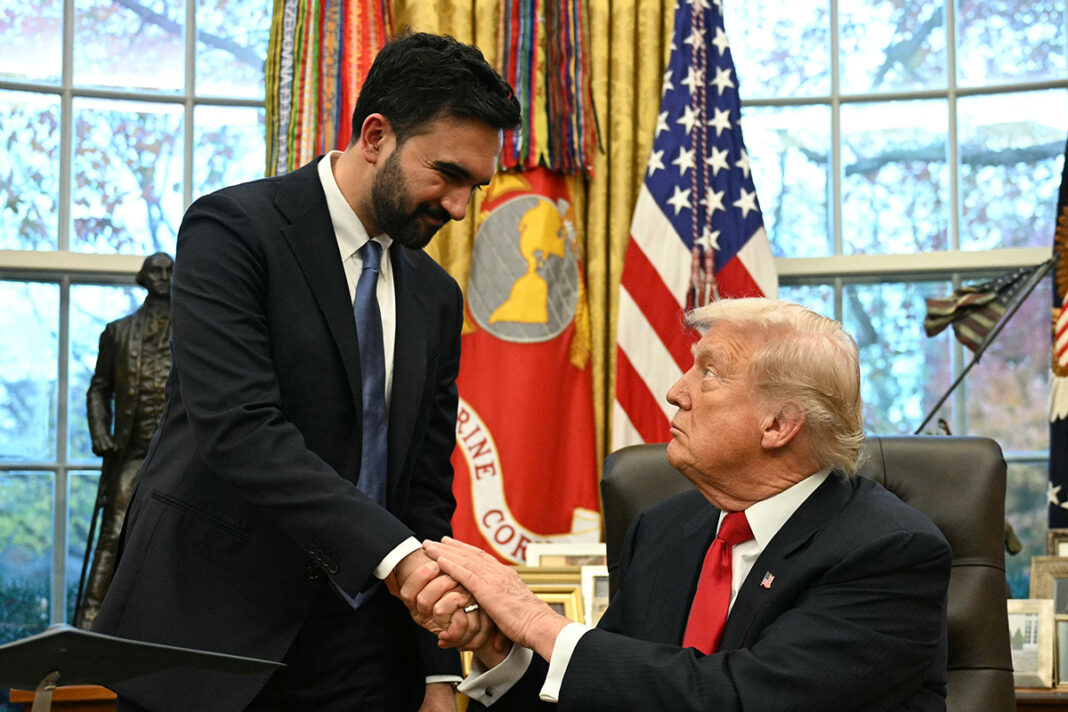

Unexpected meeting signals potential for cooperation despite political differences
In a surprising display of bipartisan civility, President Donald Trump welcomed New York City Mayor-elect Zohran Mamdani to the Oval Office for what both leaders described as a productive and cordial meeting, with Trump declaring afterward, “We agreed a lot.”
The meeting between the Republican president and the progressive Democratic Socialist mayor-elect has raised eyebrows across the political spectrum, offering a glimpse of potential cooperation on issues affecting America’s largest city—and perhaps a model for how leaders of different ideologies can work together for the common good.
An Unlikely Meeting
The sit-down between Trump and Mamdani represents one of the more unexpected political pairings in recent memory. Trump, the former New York real estate mogul turned president, and Mamdani, a Democratic Socialist who has been critical of corporate influence in politics, would seem to have little common ground.
Yet both men emerged from the Oval Office meeting speaking positively about the encounter, suggesting that when leaders prioritize their constituents over partisan politics, productive dialogue is possible.
“We had a great conversation,” Trump told reporters. “He loves New York City, I love New York City. We agreed a lot more than people might think. We’re going to work together to make New York safe and prosperous again.”
Finding Common Ground
While specific policy details from the meeting weren’t immediately disclosed, sources suggest the two leaders discussed several areas of potential cooperation:
Public Safety: Both Trump and Mamdani have expressed concern about crime in New York City, though they may differ on solutions. The willingness to discuss the issue represents important common ground.
Infrastructure: New York’s aging infrastructure needs significant investment—an area where federal and city cooperation could yield tangible results for residents.
Economic Development: Despite different approaches to economics, both leaders expressed interest in creating opportunities for New Yorkers to thrive.
Federal-City Relations: Improving coordination between federal and local authorities on issues ranging from immigration to disaster preparedness.
A Biblical Perspective on Unity
For faith-based observers, this meeting offers an opportunity to reflect on biblical principles of unity and cooperation, even amid disagreement.
Romans 12:18 instructs believers: “If possible, so far as it depends on you, live peaceably with all.” This doesn’t mean compromising core convictions, but it does mean seeking common ground where possible and treating even political opponents with respect.
The meeting also reflects the wisdom of Proverbs 25:21-22: “If your enemy is hungry, give him bread to eat, and if he is thirsty, give him water to drink, for you will heap burning coals on his head, and the LORD will reward you.” Sometimes kindness and dialogue can accomplish what confrontation cannot.
Beyond Partisan Tribalism
In an era of intense political polarization, the Trump-Mamdani meeting offers a refreshing contrast to the tribal warfare that often characterizes American politics. It suggests that leaders can:
- Prioritize constituents over partisanship: When the focus is on serving people rather than scoring political points, cooperation becomes possible
- Separate policy disagreements from personal animosity: You can disagree on issues while treating opponents with dignity
- Find unexpected allies: Sometimes those we assume are adversaries share more concerns than we realize
- Model civility: Leaders set the tone for political discourse—choosing dialogue over demonization matters
The New York Connection
Both men’s deep ties to New York City may have facilitated their rapport. Trump built his business empire in Manhattan and still considers himself a New Yorker at heart. Mamdani, representing Queens in the state assembly before his mayoral victory, has dedicated his career to serving New York’s working families.
This shared love for the city—despite vastly different visions for its future—provided a foundation for conversation that transcended ideology.
“At the end of the day, we both want what’s best for New York,” Mamdani reportedly said. “We may disagree on how to get there, but that shared goal is a starting point.”
Lessons for Christian Engagement
For Christians navigating political divisions within the church and society, this meeting offers several lessons:
1. Dialogue Doesn’t Equal Endorsement
Meeting with someone doesn’t mean you agree with their entire worldview. Jesus ate with tax collectors and sinners, engaging them without endorsing their lifestyles. Similarly, political dialogue can happen without compromising convictions.
2. Seek Understanding First
Proverbs 18:13 warns: “If one gives an answer before he hears, it is his folly and shame.” Too often, we assume we know what others think without actually listening. Trump and Mamdani’s willingness to hear each other out demonstrates wisdom.
3. Focus on Shared Humanity
Before political labels, we’re all image-bearers of God (Genesis 1:27). Recognizing our shared humanity—and shared concerns for our communities—can bridge even wide ideological divides.
4. Be Peacemakers
Jesus declared, “Blessed are the peacemakers, for they shall be called sons of God” (Matthew 5:9). In a culture of conflict, choosing dialogue over division reflects Kingdom values.
Political Realities and Challenges
Of course, one cordial meeting doesn’t erase substantive policy differences. Trump and Mamdani will likely clash on numerous issues in the months ahead. The test will be whether this initial goodwill translates into sustained cooperation where their interests align, while managing disagreements respectfully where they don’t.
Skeptics on both sides have already criticized the meeting:
- Some Trump supporters question why he’d meet with a Democratic Socialist
- Some progressives worry Mamdani is being co-opted or legitimizing Trump’s agenda
These criticisms reflect the tribal nature of modern politics, where any engagement with “the other side” is viewed as betrayal.
A Model for Governance
If Trump and Mamdani can maintain a working relationship despite their differences, it could model a healthier approach to governance—one where:
- Results matter more than rhetoric: Delivering for constituents takes priority over partisan point-scoring
- Relationships enable problem-solving: Personal rapport facilitates difficult negotiations
- Disagreement doesn’t mean disrespect: You can oppose someone’s policies while treating them with dignity
- Pragmatism complements principle: Standing firm on core values while remaining flexible on tactics
The Path Forward
As Mamdani prepares to take office and Trump continues his presidency, the relationship established in this Oval Office meeting could prove significant for New York City’s future. Federal cooperation on infrastructure funding, public safety initiatives, and economic development could materially improve life for millions of New Yorkers.
The meeting also sends a broader message: In an age of polarization, leaders can choose a different path. They can model the kind of respectful engagement that our political moment desperately needs.
A Christian Call to Prayer
Regardless of our political affiliations, Christians are called to pray for those in authority (1 Timothy 2:1-2). This includes praying that:
- Leaders would seek wisdom over winning
- Dialogue would replace demonization
- Common ground would be pursued where possible
- Disagreements would be handled with grace
- The needs of the vulnerable would remain central
- God’s purposes would be accomplished through imperfect leaders
Hope for Unity
The Trump-Mamdani meeting reminds us that unity doesn’t require uniformity. We can maintain distinct convictions while seeking common cause. We can disagree strongly on some issues while cooperating on others. We can be principled without being poisonous.
As Psalm 133:1 declares: “Behold, how good and pleasant it is when brothers dwell in unity!” While political opponents aren’t brothers in the familial sense, they are fellow citizens who share responsibility for the common good.