


The “People of the Book” is the Quran’s term for Jews and Christians, and both communities largely embraced it as a badge of honor. Christians are members of the body of Christ, a people constituted by the Word who is a person. But we reappropriated the Islamic term because it names another truth: The church is characterized by its distinctive practices of reading Scripture.
If some AI enthusiasts have their way, the next religion that comes along may dub Christians the “People of the Chatbot.” In this envisioned future, we’ll ask doctrinal or ethical questions to bots aligned with our preferred denominational tradition. We’ll listen to AI-generated sermons and seek pastoral counseling from our ever-attentive machine therapists.
Why does it matter what kind of tech we use to learn theological truths? If we come away with the same knowledge, what’s the difference between querying a chatbot or reading a book?
We can begin answering this by noting how books themselves can present the Bible as a private, individualized product rather than the Word that God’s people study together. And if that’s a risk with printed Bibles, the danger is much more acute with chatbots.
From Thomas Jefferson’s Life and Morals of Jesus of Nazareth to The Green Bible, print made it possible to package the Bible as an individual commodity rather than the common book of the church. As the ad copy for The American Patriot’s Bible puts it, “Never has a version of the Bible targeted the spiritual needs of those who love our country more.”
related


But the Word of God is not, in fact, a commodity targeted to specific consumer demographics. God does address his people personally, but rather than simply cater to our preferences, his Word convicts and challenges us so that we all might be transformed into his image (2 Cor. 3:18).
The Christian AI company Gloo seems to think it has baptized chatbots by adding training data that purportedly ensures the answers are biblically aligned and accurate. But to the extent that our interactions with Scripture amount to merely extracting words or themes that match the current shape of our souls, we’ll forgo opportunities to conform our souls to the cadences of Scripture.
Yet Christian discipleship entails precisely this transformation: Studying the written Word of God renews our minds and hearts after the pattern of the living Word of God.
Christians can’t build a common culture and shared imaginative constellations around individualized chatbot answers. The Book we share in common constitutes the church community. Yet Gloo—like its many Christian AI competitors—touts its ability to tailor chatbots to different denominational preferences, reinforcing consumer culture’s you-do-you relativism.
None of this is to say God can’t use a chatbot. God can speak through a chatbot’s responses just as he can speak through dreams and visions. He can even speak when people treat the Bible like a vending machine that dispenses answers.
Augustine’s conversion, for example, famously turned on a biblical game of chance, the kind of game middle schoolers are prone to play while bored in church: When Augustine heard a child’s voice chanting, “Tolle lege,”—“take up and read”—he picked up his Bible, let it fall open at random, and read the first verse he saw.
related


It happened to be Matthew 19:21, in which Jesus told the rich young ruler, “If you want to be perfect, go, sell your possessions and give to the poor, and you will have treasure in heaven. Then come, follow me.”
Augustine repeated the experiment and landed on Romans 13:13: “Let us behave decently, as in the daytime, not in carousing and drunkenness, not in sexual immorality and debauchery, not in dissension and jealousy.” Upon reading these two verses, he records in his Confessions, his heart was infused with the light of full certainty and he became a Christian.
But that wasn’t the end of Augustine’s study of the Bible, nor did he stick with that method (if you can call it that) in years to come. As he matured in Christ, Augustine meditated on “the whole counsel of God” (Acts 20:27, ESV) and committed much of the Bible to memory. This deep knowledge shines through in his many sermons and books.
Chatbots do not invite us to ponder that whole counsel. On the contrary, they tempt us to equate easy access with transformative understanding.
If I can instantly access any information about the Bible or theology, why would I bother internalizing anything? Yet many questions will never come to the minds of those who haven’t studied the Bible. Their default will be to search rather than to study, but this is a dangerous substitution: Without study, they won’t even know how to search well.
Reading tidbits of Scripture with a chatbot will always tend to be superficial and self-oriented. The bot will be able to answer whatever comes to mind in a given moment, but it can’t cultivate the habit of going to the Bible every day, whether through a lectionary or other reading plan, to come to see the whole narrative of God’s revelation and redemption.
Early Christians were unlike other religious cults in the Roman empire in that the community gathered around texts. But the early church also knew the dangers that Plato and others identified in textual cultures: that making words fixed and accessible would devalue memory and thereby impoverish the reader’s soul. To mitigate this risk, they focused not only on reading the Bible but on fostering a culture of reading faithfully and well.



In Plato’s Theaetetus, Socrates famously compared people’s hearts to wax. Some have softer or harder wax, and others have impurities mixed in that make it difficult for them to form and retain correct impressions. Early Christians thought carefully about how would-be disciples of Christ could impress the wax tablets of their hearts with the words of Scripture. But where studying the Bible should mold you to fit the Word, querying a chatbot will mold the Word to fit you.
Biblical study doesn’t always have that formative result, of course, which is why Christians have built safeguards against misappropriation or misreading of Scripture. Christian monasteries, cathedral schools, and eventually universities were developed to shape reading communities. Since the Reformation, as the printing press and vernacular translations made the Bible newly accessible, Protestants advocated for widespread education that, in the pietas litterata tradition of Martin Luther and Philip Melanchthon, would enable the laity not simply to read the Bible but to be edified by it.
Christians thus birthed a particular kind of print culture: adaptable, immersive, communal, and studious. Our culture of the book looks less like TikTok videos featuring leather-bound volumes in an expensive, wood-paneled library and more like the Catherine Project, busy moms listening to audiobooks, or “a small boy … reading Treasure Island under the bed-clothes by the light of an electric torch.”
It would be patently absurd to apply such immersive modes of reading to a chatbot’s answers. These boutique, ephemeral responses beg to be skimmed and forgotten: Why would you value or memorize any particular response, knowing that the next time you make a similar query, you’ll get a different reply?
In contrast, consider Thomas Cranmer’s collect for the second Sunday of Advent, which beautifully describes the formative reading to which Christians aspire:
Blessed Lord, who hast caused all holy Scriptures to be written for our learning: Grant that we may in such wise hear them, read, mark, learn, and inwardly digest them, that by patience and comfort of thy holy Word, we may embrace and ever hold fast the blessed hope of everlasting life, which thou hast given us in our Saviour Jesus Christ. Amen.
The religious reading practices that Cranmer’s list implies have long marked Christian communities. Over the centuries, our tradition of discipleship and catechesis—which runs from lectio divina to the lectionary, from Awana to Bible quizzing—has developed to take advantage of widespread literacy and access to Scripture while counteracting print’s tendencies to foment forgetfulness and atomization.
This is how we become like the blessed man who meditates on the law of the Lord day and night, who shuns sin by hiding the word of God in his heart (Ps. 1; 119:11). And in the age of AI, the church needs to retain and recover this wisdom.
It is no accident that Cranmer’s prayer belongs to the Advent season, which is the culmination of the annunciation that occurs nine months earlier. Picture the annunciation, and you’ll likely bring to mind a painting in which Gabriel interrupts Mary while she is—anachronistically—reading a book.
Perhaps she is on her knees, indicating the posture of her heart that makes her receptive to the Word. Perhaps there are multiple books with placeholders, indicating her careful study. Perhaps even in glory Mary splices her fingers between the pages of a book as her love of the written word deepens her love of the living Word standing before her.
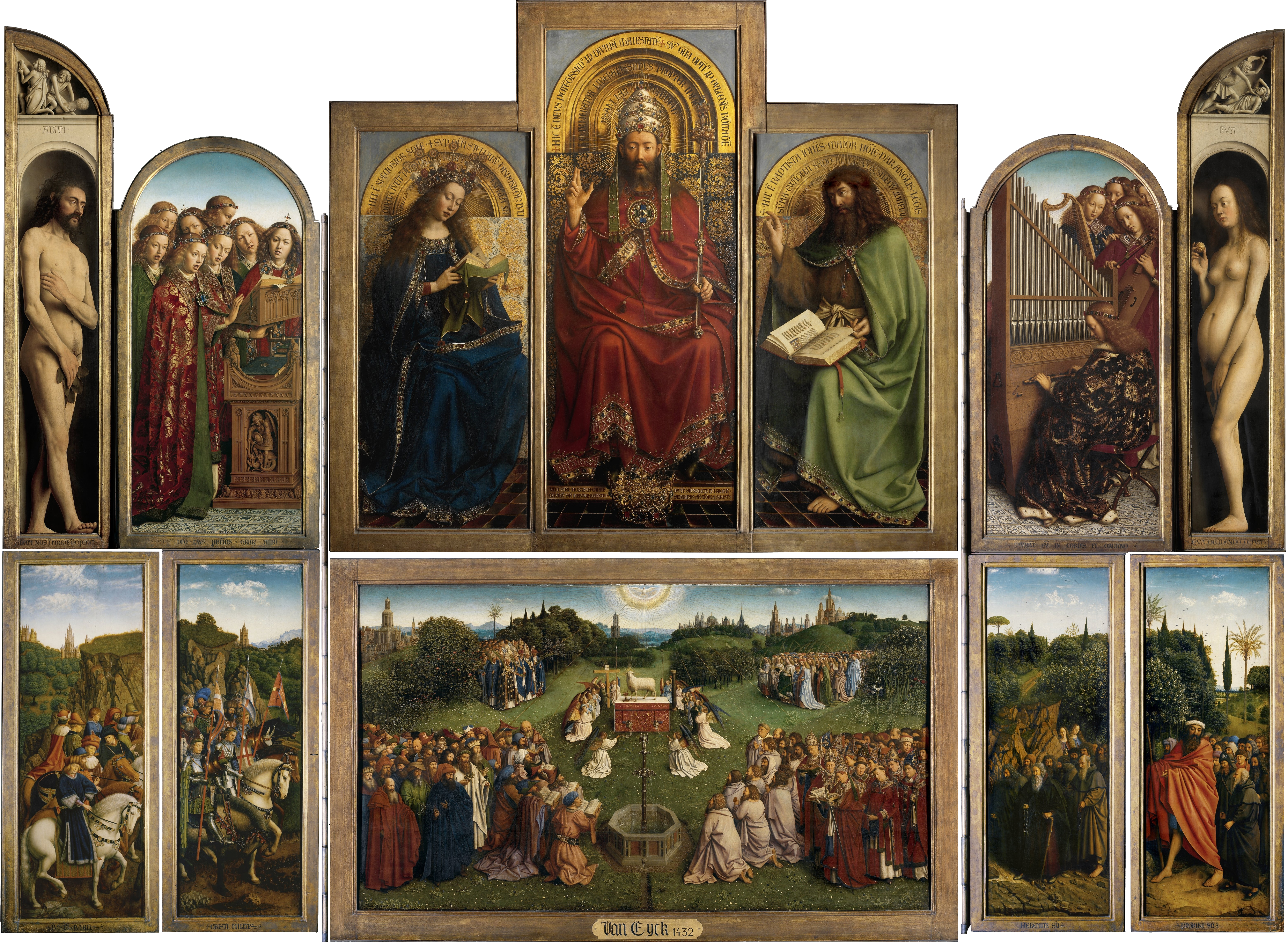
In all these images, Mary models the ideal to which the People of the Book should aspire: She responds well to the angel’s awesome proposal because she has been transformed by ruminating on the Word. Only if we refuse to become a People of the Chatbot might we hope to grow into a people who can faithfully bear the Word-made-flesh.
Jeffrey Bilbro is professor of English at Grove City College and editor in chief at the Front Porch Republic. His most recent book is Words for Conviviality: Media Technologies and Practices of Hope.
The post People of the Chatbot appeared first on Christianity Today.