


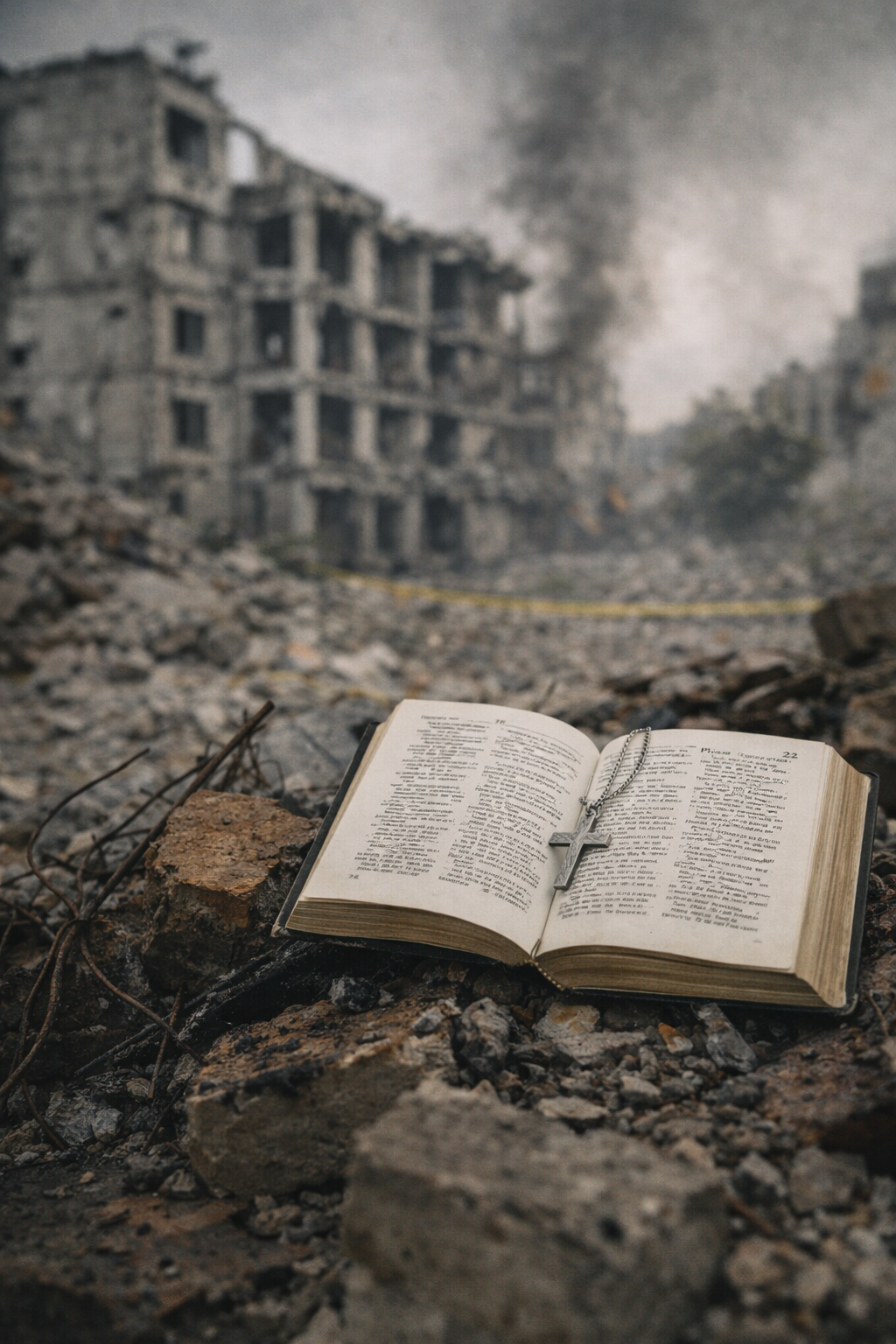

Faith, War, and the Call for Peace: Pope Leo XIV and the Biblical Perspective on Justice
As the world teeters on the edge of conflict, the recent tensions between the U.S. and Iran have reignited age-old debates about war, morality, and the role of faith in navigating such turbulent waters. In this storm, Pope Leo XIV has emerged as a beacon of peace, urging leaders to embrace dialogue over destruction. Meanwhile, theologians like Russell Moore are reminding us that Scripture is not a weapon to justify violence but a guide to justice, mercy, and reconciliation.
Pope Leo XIV’s Plea for Peace
On April 7, 2026, Pope Leo XIV stood before journalists at Castel Gandolfo and delivered a message that cut through the noise of political posturing and military threats. His words were simple yet profound: “War is always a defeat for humanity.”
Responding to inflammatory remarks from U.S. President Donald Trump, who had threatened Iran with devastating consequences, the Pope condemned such rhetoric as “unacceptable.” He called on leaders to prioritize peace over violence, urging all people of goodwill to reject war and protect innocent lives.
But Pope Leo didn’t stop at condemnation. He welcomed the fragile two-week ceasefire between the U.S. and Iran, calling it a “sign of living hope.” His appeal was not just for the absence of war but for the presence of trust, reconciliation, and understanding. In his view, this pause in hostilities is an opportunity—a chance for leaders to step back from the brink and build bridges instead of battlefields.
The Misuse of Scripture in Times of War
While world leaders wrestle with the political and moral implications of war, some have turned to the Bible to justify actions that many would deem unconscionable. Enter Russell Moore, editor-at-large for Christianity Today, who has been vocal about the dangers of misinterpreting Scripture to sanction violence.
Moore points out that while the Old Testament includes accounts of divinely commanded warfare, these events were specific to ancient Israel within the context of God’s redemptive plan. They were not blanket approvals for modern-day aggression or the targeting of civilian populations.
“Scripture is not a permission slip for war crimes,” Moore warns. He reminds believers that ultimate judgment belongs to God alone. And in Jesus Christ, the fulfillment of God’s justice and mercy, we find a call to peace—not to swords.
A Unified Call for Moral Leadership
What unites Pope Leo XIV and Russell Moore is their shared conviction that moral leadership is non-negotiable in times of conflict. The Pope’s condemnation of threats against Iran echoes the biblical principles of justice and the sanctity of life. Similarly, Moore’s theological insights challenge Christians to resist the temptation to twist Scripture into a justification for violence.
Their messages are a wake-up call. War may not be hell, but it has the power to make us hellish. The decisions made by world leaders today will have eternal consequences—not just for them, but for the countless lives caught in the crossfire.
A Time for Prayer and Action
This is not a moment for passive observation. It’s a call to prayer, reflection, and action.
Christians are urged to pray for wisdom and restraint among world leaders. Pray for the innocent—families, children, and communities—whose lives hang in the balance. And pray for a peace that reflects the justice and mercy of God.
As Pope Leo XIV boldly declared, “The threat against the entire Iranian people is unacceptable.” His words challenge us to reject violence and embody the gospel’s message of love and reconciliation.
But prayer alone is not enough. Faith calls us to act—to speak truth to power, to advocate for peace, and to remind the world that justice is not found in missiles or military might but in the transformative power of mercy and understanding.
Final Reflection
The Bible tells us in Matthew 5:9, “Blessed are the peacemakers, for they will be called children of God.”
It’s easy to feel powerless in the face of global conflict, but the call to be a peacemaker is not reserved for presidents or popes—it’s for all of us. Whether through prayer, advocacy, or quiet acts of kindness, we can all be agents of peace in a world desperate for it.
So today, let’s take Pope Leo’s words to heart. Let’s reject the rhetoric of war and embrace the gospel of peace. Let’s pray for the harvest of justice promised in Galatians 6:9—a harvest that will come, if we do not give up.
War may be loud, but peace is louder. Let’s make sure the world hears it.